
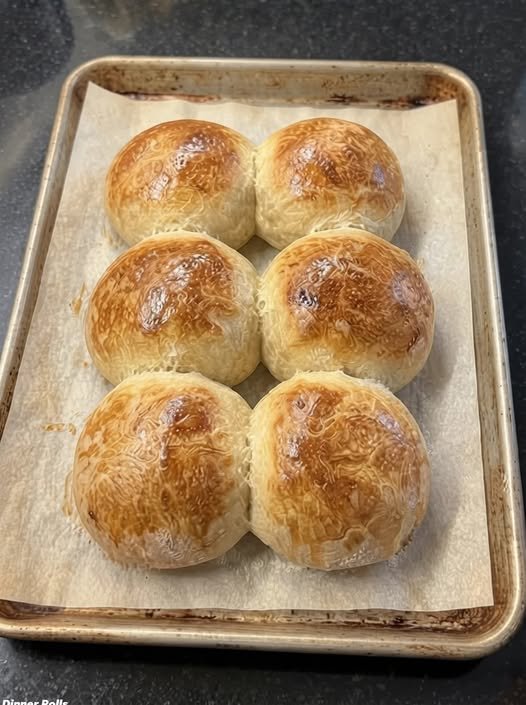
These Easy 3-Ingredient Greek Yogurt Dinner Rolls are a simple way to add warm homemade bread to dinner without working with yeast. Thick Greek yogurt and self-rising flour form the dough, while a light egg wash gives the tops a golden finish.
Mix, shape, brush, and bake. There is no fermentation or waiting for the dough to rise, making these small rolls a practical companion for soup, stew, roasted chicken, or a weeknight family meal.
Expect tender, slightly tangy rolls with a more substantial crumb than traditional yeast rolls. They are best enjoyed warm, when the crust is lightly firm and the inside is soft. The self-rising flour provides lift, but this quick dough will not develop the same airy, stretchy texture as kneaded yeast bread.
Recipe at a Glance
Yield: 6 small dinner rolls
Preparation: Approximately 10 minutes
Baking: Approximately 20–25 minutes
Brief cooling: 5–10 minutes
Total: Approximately 35–45 minutes, including cooling
Oven temperature: 375°F
Yeast: None
Rising time: None
The baking time assumes small, evenly sized rolls and a fully preheated oven. Allow extra time if your oven takes longer to preheat.
Why You’ll Love These Rolls
Only three ingredients: Greek yogurt, self-rising flour, and an egg for the tops.
No yeast or proofing: The dough is ready to shape shortly after mixing.
Small-batch convenience: Six rolls are manageable for a family dinner or a few meals.
No mixer required: Use a bowl, spoon, and your hands.
Flexible serving: Split them for butter, dip them into soup, or use them for small sandwiches.
What Makes This a Three-Ingredient Recipe?
The dough itself contains two ingredients: Greek yogurt and self-rising flour. The third ingredient, a beaten egg, is brushed on the outside for color and a lightly glossy finish.
Self-rising flour is a prepared blend of flour, leavening, and salt. That built-in leavening is why the recipe does not need a separate packet of yeast or an additional spoonful of baking powder.
If you omit the egg wash, the basic version becomes a two-ingredient roll with a paler, more matte top. Butter for serving and any seasonings are optional additions, rather than part of the three-ingredient formula.
Ingredients
1 cup plain Greek yogurt, thick and well stirred
1½ cups self-rising flour, spooned and leveled, plus a little for shaping if necessary
1 large egg, beaten, for brushing
Formula note: Yogurt thickness varies, so use the texture cues and make small adjustments as needed. This suggested formula has not been kitchen-tested.
Ingredient Notes
Greek Yogurt
Use plain, unsweetened Greek yogurt. Thick yogurt is important because it supplies both moisture and body without making the dough overly loose.
Full-fat or 2% Greek yogurt is a good starting point for a tender result. Nonfat Greek yogurt can also vary considerably in thickness and may produce a slightly different texture. Pour off any obvious pooled liquid before measuring, then stir the yogurt until smooth.
Regular yogurt, drinkable yogurt, and flavored yogurt are not direct equivalents. A thinner product introduces more free liquid, while a sweetened or flavored yogurt changes the taste.
Self-Rising Flour
Measure by fluffing the flour, spooning it into the cup, and leveling the top. Scooping from a packed bag can add more flour than intended and make the rolls heavy.
Check that the bag says self-rising flour. Plain all-purpose flour has no built-in leavening and will not produce the intended lift on its own.
The freshness of self-rising flour matters because its baking powder loses effectiveness over time. Store it according to its package directions and replace an old bag if it no longer gives reliable results.
Egg Wash
Beat the egg thoroughly so it brushes on in a thin layer. You will probably have some left over; there is no need to use the entire egg on six small rolls.
The egg goes on the surface rather than into the dough. Adding it to the dough would change the liquid balance and require a different formula.
If You Do Not Have Self-Rising Flour
For a homemade substitute, combine:
1½ cups all-purpose flour
2¼ teaspoons baking powder
⅜ teaspoon fine salt
Whisk thoroughly before mixing with the yogurt. This is a common-style substitute rather than an exact match for every commercial self-rising flour, since brands differ in flour and salt content.
Using separately measured flour, baking powder, and salt increases the ingredient count. It is a useful alternative, but the recipe is only a three-ingredient preparation when using the prepared self-rising flour blend.
Equipment
You will need a mixing bowl, sturdy spoon, spatula, baking sheet, parchment paper, and pastry brush. A small scoop or bench scraper can help divide the dough evenly.
A standard baking sheet gives the rolls room to brown individually. Arrange them with a little space between them rather than pressing them tightly into a small dish.
How to Make Greek Yogurt Dinner Rolls
1. Preheat the Oven
Heat the oven to 375°F. Line a baking sheet with parchment paper.
Have the oven fully heated before baking. The leavening begins working once the flour meets the yogurt, so this is not a dough to leave sitting for a long proofing period.
2. Combine the Yogurt and Flour
Place the yogurt in a medium bowl. Add the self-rising flour and stir until a shaggy dough forms, scraping the bottom and sides of the bowl.
The mixture may look uneven at first. Continue gently folding and pressing it together until there are no large dry pockets.
3. Check the Texture
Let the dough stand for 2–3 minutes if it feels very sticky. This is a short hydration rest, not a rise.
The dough should be soft, slightly tacky, and able to hold a rough ball shape. It should not pour or spread like batter.
If it is still too wet to handle, sprinkle in additional self-rising flour 1 tablespoon at a time. If it is dry and crumbly after pressing together, add a teaspoon of yogurt. Make the smallest adjustment that brings it together rather than adding a large amount of flour at once.
4. Divide into Six Portions
Lightly flour your hands and work surface. Turn out the dough and gently bring it together with a few folds. Do not knead repeatedly as you would a yeast dough.
Divide into six equal portions. Similar sizes help the centers finish baking at the same time.
5. Shape the Rolls
Gently round each portion, tucking rough edges underneath. Place on the baking sheet with approximately 2 inches between them.
Avoid packing the dough tightly or squeezing out every irregularity. A slightly rustic surface is fine. Aim for small, rounded rolls rather than tall, compact balls that may brown before the centers bake.
6. Brush with Egg
Lightly brush the tops and upper sides with beaten egg. Use just enough to coat the surface, avoiding puddles around the bases.
Egg wash improves color and shine, but it does not replace the need to bake the centers fully.
7. Bake
Bake for approximately 20–25 minutes, until the rolls are golden and the centers are cooked through. Exact timing depends on their size, oven, and yogurt moisture.
If the tops brown quickly, tent loosely with foil and continue baking. When checking the first batch, split a test roll after a brief rest if you are unsure: the center should look set and bread-like, without raw, sticky dough.
A thermometer reading around 195–200°F can be a useful texture guide, but consider it alongside the appearance of the interior rather than as the only check.
8. Rest Briefly and Serve
Let the rolls rest on the sheet for about 5 minutes, then move to a rack. Give them another few minutes before splitting so the soft centers can settle.
Serve warm with optional butter or alongside dinner. Butter is a serving addition and is not included in the three-ingredient base recipe.
Tips for Tender Rolls
Start with thick yogurt. Thin yogurt may require more flour, which changes the balance and can make the rolls heavier.
Do not chase a completely dry dough. A little tackiness is normal. Lightly floured hands are often enough for shaping.
Handle gently. Repeated kneading and extra flour can make these quick rolls tougher.
Keep portions consistent. An oversized roll takes longer to bake through than the others.
Brush lightly. A thin egg wash gives a neater finish than a heavy coating.
Eat warm for the best texture. These are quick rolls, and they firm as they cool. Brief reheating helps soften stored portions.
Troubleshooting
Problem Possible cause What to try
Dough sticks heavily to your hands Thin yogurt or insufficient hydration time Rest briefly, flour your hands, then add flour only a tablespoon at a time if needed.
Dough crumbles Too much flour or unusually thick yogurt Press gently together and add yogurt a teaspoon at a time.
Rolls are dense Excess flour, heavy handling, or inactive leavening Measure lightly, handle briefly, and use fresh self-rising flour.
Tops brown before centers set Thick shapes or hot-running oven Shape smaller even rolls and tent loosely with foil if necessary.
Rolls barely rise Plain flour used by mistake or old self-rising flour Check the flour label and freshness.
Centers seem gummy Underbaked or split immediately while very hot Allow a brief rest and check for raw dough before serving.
Variations
The plain version uses three ingredients. The following additions create flavored variations with a longer ingredient list.
Garlic Herb Rolls
Add a small pinch of garlic powder and dried Italian herbs to the flour. Keep the additions modest so they complement the yogurt’s tang.
Cheddar Rolls
Fold in approximately ¼ cup shredded cheddar after the dough starts to come together. Cheese adds salt and richness and may alter spreading slightly.
Seeded Tops
Sprinkle sesame seeds or a little everything bagel seasoning over the egg-washed tops. Use a light hand with salty seasoning blends.
Butter Finish
Brush baked rolls lightly with melted butter for a softer surface. This adds a fourth ingredient but works well when you want a richer dinner roll.
No Egg Wash
Leave off the beaten egg for a two-ingredient preparation. The tops will generally be less glossy and may look paler, so check the centers rather than waiting for the same color as an egg-washed batch.
Serving Suggestions
Serve these rolls with tomato soup, chicken soup, beef stew, or roasted vegetables. They are also useful with a family roast dinner when you want a small batch of bread without planning a yeast dough in advance.
Split warm rolls and add butter, jam, or honey for a simple snack. Once cool enough to slice cleanly, they can hold small sandwich fillings, although their tender crumb is more delicate than a chewy yeast roll.
For a fuller breakfast, serve one alongside eggs and fruit. Greek yogurt contributes protein, but the rolls are primarily a flour-based bread and should not automatically be described as low-carb.
Storage and Reheating
Short-Term Storage
Cool completely before sealing to avoid trapped condensation. For the best texture, enjoy the rolls on the day they are made. In a cool, dry kitchen, keep plain baked rolls covered until the following day, or refrigerate for longer storage.
The fact that yogurt and egg were used before baking does not automatically give a fully baked bread the same storage requirements as an unbaked dairy mixture. Added perishable fillings or toppings need their own appropriate storage.
Refrigerator
Refrigerate cooled rolls in an airtight container for up to 4 days. They may become firmer in the refrigerator, so warm before serving. Discard if mold develops.
Freezer
Wrap cooled rolls and freeze in a freezer-safe bag for up to 2 months for best quality. Freeze individually if you want to remove one or two at a time.
Reheating
Warm thawed rolls in a 300°F oven for approximately 5–8 minutes, or until warmed through. Wrap loosely in foil if they are drying at the edges.
For a quick option, microwave one roll briefly, starting with about 10 seconds and checking before adding more time. Overheating can make it tough or rubbery as it cools.
Frequently Asked Questions
Are these as fluffy as traditional yeast rolls?
They have a different texture. Expect tender, slightly denser quick rolls with modest lift rather than a stretchy, airy yeast-bread crumb.
Why use an egg if the dough has only two ingredients?
The egg is a surface wash for color and shine. It is the third ingredient in the complete recipe, but it is not mixed into the dough.
Can I use regular yogurt?
It is usually thinner and less predictable for this ratio. Thick Greek yogurt is the intended ingredient.
Can I use plain all-purpose flour by itself?
No. It needs added baking powder and salt to approximate self-rising flour. See the substitute above.
Can I make the dough ahead?
For the most predictable lift, mix and bake close together. Prepare the equipment in advance, or bake the rolls and reheat them instead of holding the mixed dough for hours.
Do they need a second rise?
No. There is no yeast fermentation. A brief rest helps the flour absorb moisture, but it is not a proofing step.
Can I double the recipe?
You can multiply the ingredients and use two baking sheets, keeping the same roll size. Avoid crowding, and check each tray independently because ovens do not always heat evenly.
Are they gluten-free?
As written, no. Standard self-rising flour contains wheat. A gluten-free blend needs its own suitable formula rather than an assumed equal swap.
Can I add protein powder?
Not without changing the recipe. Protein powders absorb moisture differently and can make baked goods dry or dense. The listed formula does not include one.
Recipe Card: Easy 3-Ingredient Greek Yogurt Dinner Rolls
Yield: 6 small rolls
Preparation: Approximately 10 minutes
Baking: Approximately 20–25 minutes
Cooling: 5–10 minutes
Total: Approximately 35–45 minutes
Oven: 375°F
Ingredients
1 cup thick plain Greek yogurt
1½ cups self-rising flour, spooned and leveled, plus a little for shaping if needed
1 large egg, beaten, for brushing
Instructions
Preheat the oven to 375°F. Line a baking sheet with parchment.
Stir the yogurt and flour together until a shaggy dough forms. Rest for 2–3 minutes if sticky.
Adjust only if necessary: add flour a tablespoon at a time if too wet, or yogurt a teaspoon at a time if too dry. Aim for soft, slightly tacky dough that holds its shape.
With lightly floured hands, divide into six equal portions. Gently shape into rounds and place approximately 2 inches apart.
Brush lightly with beaten egg; you may not use it all.
Bake for approximately 20–25 minutes, until golden and cooked through. Tent with foil if browning before the centers set.
Rest for 5–10 minutes before splitting. Serve warm with optional accompaniments.
Approximate Nutrition
Estimate 140–165 calories and 6–8 grams of protein per roll, depending on the yogurt, flour, added shaping flour, and how much egg wash is used. These are approximate values before butter, cheese, toppings, or fillings. Calculate using your ingredient labels for more precise results.
Notes
This suggested formula has not been kitchen-tested.
The egg is for brushing, not mixing into the dough.
Self-rising flour supplies the leavening and salt.
Extra flour should be added sparingly.
These rolls are naturally more substantial than yeast rolls and taste best warm.
Final Thoughts
Greek yogurt and self-rising flour make a straightforward dough for six small dinner rolls, while an egg wash adds a golden finish. Keep the dough soft, shape gently, and check that the centers are set before serving. A short rest after baking makes them easier to split and enjoy alongside dinner.
Description
Yield: 6 small rolls
Preparation: Approximately 10 minutes
Baking: Approximately 20–25 minutes
Cooling: 5–10 minutes
Total: Approximately 35–45 minutes
Oven: 375°F
Ingredients
Scale
1x
2x
3x
1 cup thick plain Greek yogurt
1½ cups self-rising flour, spooned and leveled, plus a little for shaping if needed
1 large egg, beaten, for brushing
Cook Mode Prevent your screen from going dark
Instructions
Preheat the oven to 375°F. Line a baking sheet with parchment.
Stir the yogurt and flour together until a shaggy dough forms. Rest for 2–3 minutes if sticky.
Adjust only if necessary: add flour a tablespoon at a time if too wet, or yogurt a teaspoon at a time if too dry. Aim for soft, slightly tacky dough that holds its shape.
With lightly floured hands, divide into six equal portions. Gently shape into rounds and place approximately 2 inches apart.
Brush lightly with beaten egg; you may not use it all.
Bake for approximately 20–25 minutes, until golden and cooked through. Tent with foil if browning before the centers set.
Rest for 5–10 minutes before splitting. Serve warm with optional accompaniments.
Leave a Reply