
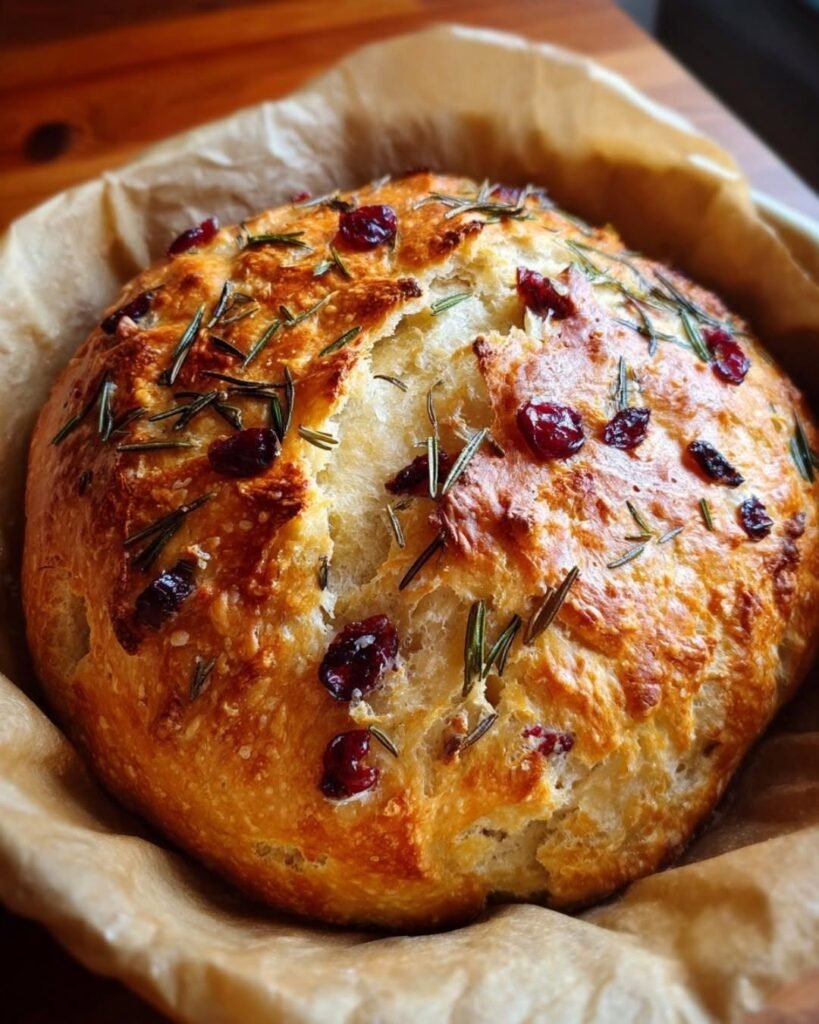
This No-Knead Rosemary Cranberry Bread is a beautiful homemade artisan loaf with a golden, crispy crust and a soft, chewy interior. Sweet dried cranberries, fragrant fresh rosemary, rich olive oil, and flaky sea salt create the perfect balance of sweet and savory flavors.
The best part? There is no kneading required! Simply mix the ingredients, let the dough rise, and bake until golden and crusty. It is perfect for holiday gatherings, breakfast, sandwiches, or serving alongside soups and salads.
Preparation Time: 15 minutes
Rising Time: 12–18 hours
Cooking Time: 45–50 minutes
Total Time: Approximately 13–19 hours
Servings: 10–12 slices
Course: Bread
Cuisine: Artisan / Mediterranean
Cooking Method: Dutch Oven Baking
Ingredients
– 3 cups (375g) all-purpose flour or bread flour
– 1½ teaspoons fine sea salt
– ½ teaspoon instant yeast
– 1½ cups (360ml) lukewarm water
– ¾ cup dried cranberries
– 1½ tablespoons fresh rosemary, finely chopped
– 2 tablespoons extra virgin olive oil
– 1 tablespoon honey (optional)
– 1 tablespoon flour, for dusting
– 1 teaspoon flaky sea salt, for topping
– 1 teaspoon fresh rosemary leaves, for topping
– 1 tablespoon olive oil, for brushing
Instructions
Step 1: Mix the Dry Ingredients
In a large mixing bowl, combine the flour, fine sea salt, and instant yeast. Stir everything together until evenly distributed.
Step 2: Add the Flavor Ingredients
Add the dried cranberries and chopped fresh rosemary. Mix gently so the cranberries and rosemary are evenly spread throughout the flour.
Step 3: Add the Wet Ingredients
Pour in the lukewarm water and olive oil. Add honey if using.
Stir with a wooden spoon or spatula until a sticky, shaggy dough forms. The dough should look rough and slightly wet. Do not knead it.
Step 4: Let the Dough Rise
Cover the bowl tightly with plastic wrap or a clean kitchen towel.
Leave the dough at room temperature for 12–18 hours, or until it becomes bubbly, puffy, and approximately doubled in size.
The rising time depends on the room temperature. A cooler kitchen may require more time.
Step 5: Shape the Dough
Lightly flour a clean work surface. Transfer the dough onto it.
Using lightly floured hands, gently fold the edges of the dough toward the center to create a round loaf. Avoid pressing out too much air.
Place the dough seam-side down on a piece of parchment paper. Cover loosely and let it rest for another 30–45 minutes.
Step 6: Preheat the Dutch Oven
About 30 minutes before baking, place a Dutch oven with its lid inside the oven.
Preheat the oven to 450°F (230°C). Make sure the Dutch oven is suitable for this temperature.
Step 7: Prepare the Bread for Baking
Carefully remove the hot Dutch oven from the oven.
Brush the top of the dough lightly with olive oil. Sprinkle with flaky sea salt and a few fresh rosemary leaves.
Using a sharp knife or bread lame, make a shallow cut across the top of the loaf to help it expand while baking.
Carefully transfer the dough with the parchment paper into the hot Dutch oven.
Step 8: Bake Covered
Cover the Dutch oven with its lid and bake for 30 minutes.
The covered baking environment traps steam, helping the bread develop a beautiful crust and soft interior.
Step 9: Bake Uncovered
Remove the lid and continue baking for another 15–20 minutes, until the bread is deeply golden brown and crusty.
Step 10: Cool and Serve
Carefully remove the bread from the Dutch oven and transfer it to a wire rack.
Allow it to cool for at least 45–60 minutes before slicing. This helps the inside finish setting and prevents a gummy texture.
Slice, serve, and enjoy!
Serving Suggestions
This rosemary cranberry bread tastes wonderful with:
– Extra virgin olive oil and balsamic vinegar
– Whipped butter or herb butter
– Cream cheese or whipped ricotta
– Brie or goat cheese
– Roasted garlic spread
– Mediterranean hummus
– Tomato soup or creamy vegetable soup
– Roasted chicken or turkey
– Fresh salads and cheese boards
For a beautiful appetizer, slice the bread, lightly toast it, and top with whipped ricotta, a little honey, and fresh rosemary.
Nut Information & Allergens
Does this recipe contain nuts?
No. The standard recipe contains no peanuts or tree nuts.
Tree Nuts: None in the listed ingredients.
Peanuts: None in the listed ingredients.
Nut-Free: Yes, when prepared with the listed ingredients and without cross-contact.
Other Allergens:
– Wheat: Contains wheat flour and gluten.
– Gluten: Not suitable for people with celiac disease or gluten intolerance.
– Yeast: Contains baker’s yeast.
– Possible sulfites: Some dried cranberries contain added sulfites. Check the package label.
– Honey: Optional ingredient; omit if you prefer not to use it.
Nut Allergy Precautions:
– Check dried cranberry packaging for nut cross-contact warnings.
– Check flour and other packaged ingredients.
– Use clean bowls, utensils, baking equipment, and work surfaces.
– Do not assume commercially prepared dried fruit is nut-free without checking its label.
Dairy-Free: Yes. The standard recipe contains no dairy.
Egg-Free: Yes. No eggs are needed.
Vegan Option: Use the recipe without honey, or replace honey with maple syrup.
Estimated Nutrition Information
Approximate nutrition per slice, assuming 12 slices:
– Calories: 190
– Protein: 4g
– Carbohydrates: 36g
– Fat: 4g
– Saturated Fat: 0.5g
– Fiber: 2g
– Sugar: 7g
– Sodium: 300mg
Nutrition values are estimates and may vary depending on the flour, dried cranberries, olive oil, and amount of sea salt used.
Helpful Tips for Perfect No-Knead Bread
1. Use lukewarm water: Water that is too hot can damage the yeast. Aim for approximately 100–110°F (38–43°C).
2. Do not add too much flour: The dough should be sticky and slightly wet. This helps create an airy crumb.
3. Use fresh rosemary: Fresh rosemary provides a stronger, more fragrant flavor.
4. Choose good-quality cranberries: Soft, plump dried cranberries give the bread a pleasant sweetness.
5. Allow enough rising time: A long rise develops flavor and improves the bread’s texture.
6. Preheat the Dutch oven: A hot Dutch oven helps create a crisp, golden crust.
7. Do not cut too early: Allow the loaf to cool before slicing so the center does not become gummy.
8. Adjust the salt: If your cranberries are sweetened, flaky sea salt on top creates a delicious sweet-and-salty balance.
Storage and Reheating
Room Temperature: Store the completely cooled loaf in a paper bread bag or bread box for up to 2 days.
Refrigerator: Refrigeration is generally not recommended because it can make homemade bread stale more quickly.
Freezer: Slice the cooled bread and freeze in an airtight freezer-safe bag for up to 2–3 months.
Reheating: Warm slices in a toaster or heat the whole loaf in a 325°F (165°C) oven for approximately 8–10 minutes.
Serving Tip: Toast leftover slices and drizzle with olive oil for a delicious breakfast or snack.
Questions & Answers (Q&A)
Q1: Why is this bread called no-knead bread?
It is called no-knead bread because you do not need to knead the dough by hand or use a stand mixer. A long resting period allows the flour to hydrate and the gluten to develop naturally.
Q2: Can I use all-purpose flour instead of bread flour?
Yes. All-purpose flour works well. Bread flour may produce a slightly chewier texture.
Q3: Can I use instant yeast instead of active dry yeast?
Yes. The recipe uses instant yeast. If using active dry yeast, dissolve it in the lukewarm water first and allow it to stand for approximately 5–10 minutes before mixing.
Q4: Can I prepare the dough overnight?
Yes. Overnight rising is ideal for this recipe. Mix the dough in the evening and bake it the following day.
Q5: Can I let the dough rise for more than 18 hours?
It may be possible in a cool environment, but an excessively long rise can cause the dough to over-ferment and collapse. Check the dough’s appearance rather than relying only on the clock.
Q6: Why is my dough so sticky?
No-knead dough is naturally sticky because it contains a relatively high amount of water. Use lightly floured hands when shaping it rather than adding too much extra flour.
Q7: Can I use fresh cranberries instead of dried cranberries?
Dried cranberries are recommended because they add sweetness without introducing much extra moisture. Fresh cranberries can be used, but they are more tart and may affect the dough’s moisture.
Q8: Can I use frozen cranberries?
Dried cranberries are best for this recipe. Frozen cranberries should be thawed and drained thoroughly before use, but the texture and moisture may differ.
Q9: Can I use dried rosemary instead of fresh rosemary?
Yes. Use approximately 1–1½ teaspoons dried rosemary instead of 1½ tablespoons fresh rosemary.
Q10: Can I make this bread without a Dutch oven?
Yes. Bake it on a preheated baking sheet or in an oven-safe covered baking pot. To help create steam, place a separate oven-safe metal pan on the lower rack and carefully add hot water when baking. Never pour water onto the oven floor or a hot glass dish.
Q11: Can I make this recipe without honey?
Yes. Honey is optional and can be omitted without affecting the basic bread structure.
Q12: Is this bread sweet or savory?
It is a combination of both. The cranberries add gentle sweetness, while rosemary, olive oil, and sea salt provide a savory Mediterranean flavor.
Q13: Can I add walnuts or pecans?
Yes. You can add ½ cup chopped walnuts or pecans for extra crunch. However, the bread will no longer be nut-free.
Q14: Can I add cheese to the dough?
Yes. Add approximately ½ cup grated Parmesan or shredded sharp cheddar for a savory variation. This will make the recipe dairy-containing.
Q15: Why is my bread dense inside?
Common reasons include insufficient rising time, expired yeast, too much added flour, or slicing the bread while it is still hot.
Q16: How do I get a crispy crust?
Bake the bread in a properly preheated Dutch oven with the lid on for the first 30 minutes, then remove the lid to finish browning.
Q17: Is this recipe vegan?
Yes, if you omit the optional honey or replace it with maple syrup.
Q18: Is this recipe dairy-free?
Yes. The standard recipe does not contain milk, butter, or cheese.
Q19: Is this bread gluten-free?
No. It contains wheat flour. A gluten-free flour blend would require a specially adjusted recipe because gluten-free dough behaves differently.
Q20: Does this bread contain nuts?
No. The original recipe contains no peanuts or tree nuts. Adding walnuts, pecans, or other nuts changes its allergen status.
Q21: Can I use whole wheat flour?
You can replace up to 1 cup of the all-purpose flour with whole wheat flour. The loaf may be denser and may need a little extra water.
Q22: Can I make smaller bread rolls instead of one large loaf?
Yes. Divide the dough into smaller portions after the first rise, shape gently, and allow them to rest before baking. Baking time will be shorter, so check them frequently.
Q23: Can I freeze this bread?
Yes. Cool it completely, slice it, and freeze in an airtight bag. Toast individual slices directly from frozen.
Q24: What can I serve with rosemary cranberry bread?
It pairs beautifully with soups, salads, roasted chicken, turkey, cheese boards, olive oil dips, and creamy spreads.
Q25: Can I make this bread ahead for Thanksgiving or Christmas?
Absolutely. Bake it a day ahead, allow it to cool completely, and store it properly. Warm it briefly in the oven before serving.