
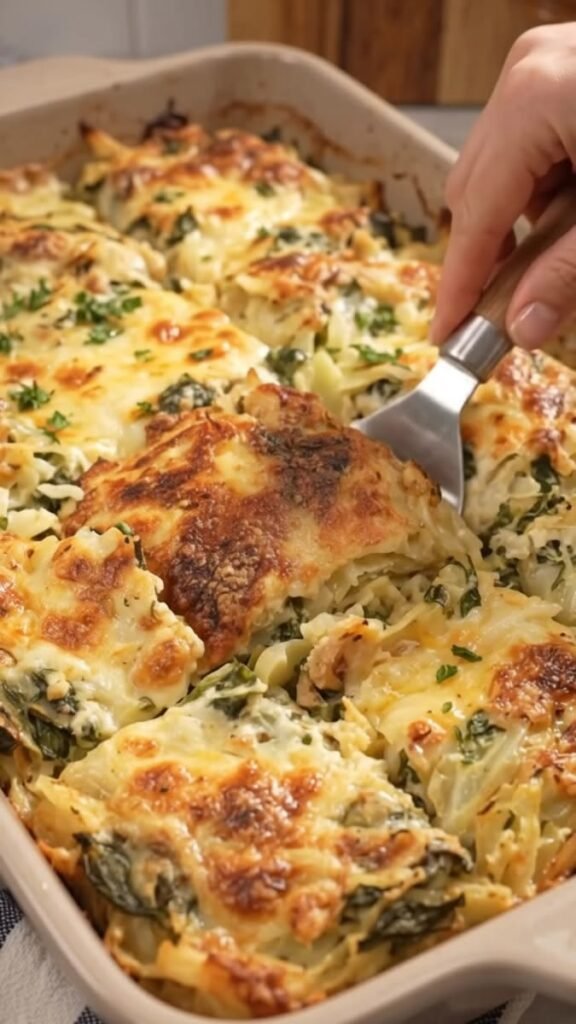
A delicious, creamy, and comforting vegetable casserole featuring tender cabbage, fresh spinach, garlic, and plenty of melted cheese. This easy oven-baked dish has a golden, cheesy topping and a soft, flavorful center. Perfect as a family-friendly side dish or a satisfying meatless dinner.
Ingredients
– 4 cups green cabbage, thinly sliced
– 3 cups fresh spinach
– 1 small onion, finely chopped
– 2 cloves garlic, minced
– 2 tablespoons olive oil or butter
– 3 large eggs
– ½ cup sour cream
– ½ cup milk
– 1 cup shredded mozzarella cheese
– ½ cup shredded cheddar cheese
– ¼ cup grated Parmesan cheese
– ½ teaspoon salt, or to taste
– ½ teaspoon black pepper
– ½ teaspoon Italian seasoning
– ¼ teaspoon paprika
– 2 tablespoons chopped fresh parsley (optional)
Instructions
1. Preheat the Oven: Preheat your oven to 375°F (190°C). Lightly grease a medium-sized baking dish with butter or cooking spray.
2. Prepare the Cabbage: Remove any damaged outer cabbage leaves. Wash, dry, and thinly slice the cabbage into bite-sized pieces.
3. Cook the Onion and Garlic: Heat olive oil or butter in a large skillet over medium heat. Add the chopped onion and cook for 3–4 minutes until softened. Stir in the minced garlic and cook for another 30 seconds.
4. Add the Cabbage: Add the sliced cabbage to the skillet. Season with salt, black pepper, Italian seasoning, and paprika. Cook for 7–9 minutes, stirring occasionally, until the cabbage begins to soften.
5. Add the Spinach: Add the fresh spinach in batches. Stir until wilted and combined with the cabbage. Remove from the heat and allow the vegetables to cool slightly. Drain any excess liquid.
6. Prepare the Creamy Mixture: In a large mixing bowl, whisk together the eggs, sour cream, and milk until smooth.
7. Add the Cheese: Stir in half of the mozzarella, cheddar, and Parmesan cheese. Mix until combined.
8. Combine Everything: Add the cooked cabbage and spinach mixture to the creamy cheese mixture. Stir gently until all the vegetables are evenly coated.
9. Transfer to Baking Dish: Spread the mixture evenly into the prepared baking dish. Sprinkle the remaining mozzarella, cheddar, and Parmesan cheese over the top.
10. Bake: Bake uncovered for 25–35 minutes, until the center is fully set and the cheese is melted, bubbly, and golden brown. The center should reach 160°F (71°C).
11. Rest and Serve: Allow the casserole to rest for 5–10 minutes before slicing. Garnish with fresh parsley if desired and serve warm.
Helpful Tips for the Best Cabbage and Spinach Bake
– Remove Excess Moisture: Drain the cooked vegetables well to prevent a watery casserole.
– Use Fresh Cheese: Freshly shredded cheese melts smoothly and creates a better topping.
– Avoid Overcooking: Cook cabbage until slightly tender before baking so it retains some texture.
– Add More Vegetables: Mushrooms, zucchini, bell peppers, or broccoli make delicious additions.
– Make It Extra Creamy: Replace the milk with heavy cream for a richer texture.
– Get a Golden Top: Broil for 1–2 minutes at the end, watching carefully to prevent burning.
Nutrition Information
Approximate values per serving, based on 6 servings.
– Calories: 285 kcal
– Protein: 17g
– Carbohydrates: 12g
– Fat: 20g
– Saturated Fat: 10g
– Fiber: 3g
– Sugar: 5g
– Sodium: 520mg
– Calcium: 320mg
Nutrition values vary depending on the cheese and dairy products used.
Nut Information and Allergen Details
Nuts in This Recipe:
– Almonds: None
– Walnuts: None
– Pecans: None
– Cashews: None
– Pistachios: None
– Hazelnuts: None
– Peanuts: None
– Macadamia nuts: None
– Pine nuts: None
Allergen Information:
– Dairy: Contains mozzarella, cheddar, Parmesan, sour cream, and milk.
– Eggs: Contains eggs.
– Gluten: No gluten-containing ingredients in the listed recipe.
– Soy: No added soy ingredients.
– Sesame: No added sesame ingredients.
Nut-Free Note: This recipe contains no added nuts. However, check cheese and packaged ingredient labels for cross-contact warnings if preparing food for someone with a nut allergy.
Questions and Answers (Q&A)
Q1: Can I use frozen spinach instead of fresh spinach?
Yes! Use approximately 1 cup of thawed frozen spinach. Squeeze out all excess water before adding it to the cabbage.
Q2: Can I prepare this casserole ahead of time?
Yes. Prepare the vegetable and cheese mixture, transfer it to the baking dish, cover, and refrigerate. Bake within 24 hours, adding a few extra minutes if needed.
Q3: What cheese works best for this recipe?
Mozzarella provides a stretchy texture, cheddar adds a rich flavor, and Parmesan creates a delicious savory finish.
Q4: How do I prevent the casserole from becoming watery?
Cook the cabbage and spinach before baking and drain excess liquid thoroughly.
Q5: Can I make this recipe without eggs?
Yes. You can experiment with a thickened cream cheese or béchamel sauce instead, although the texture will be softer.
Q6: Can I add chicken to this casserole?
Absolutely! Add cooked, shredded chicken for a more protein-rich meal.
Q7: Is this recipe keto-friendly?
It can fit many low-carb eating plans. For a stricter keto version, check the carbohydrate content of your dairy products and seasonings.
Q8: Can I use Greek yogurt instead of sour cream?
Yes! Plain, unsweetened Greek yogurt is an excellent substitute.
Q9: How should I store leftovers?
Store leftovers in an airtight container in the refrigerator for 3–4 days.
Q10: Can I freeze Cheesy Cabbage and Spinach Bake?
Yes, although the texture may change slightly after thawing. Freeze in airtight portions for up to 2 months for best quality.
Q11: What can I serve with this bake?
Serve with grilled chicken, roasted fish, baked salmon, fresh Mediterranean salad, or garlic bread.
Q12: Can I make this casserole gluten-free?
Yes! The listed ingredients are naturally gluten-free when using suitable certified gluten-free products and checking labels for cross-contact.
Q13: Can I use red cabbage instead of green cabbage?
Yes. Red cabbage works, although it has a slightly stronger flavor and may change the color of the finished dish.
Q14: How do I know when the casserole is ready?
The cheese should be melted and golden, the center should be set, and the internal temperature should reach 160°F (71°C).