
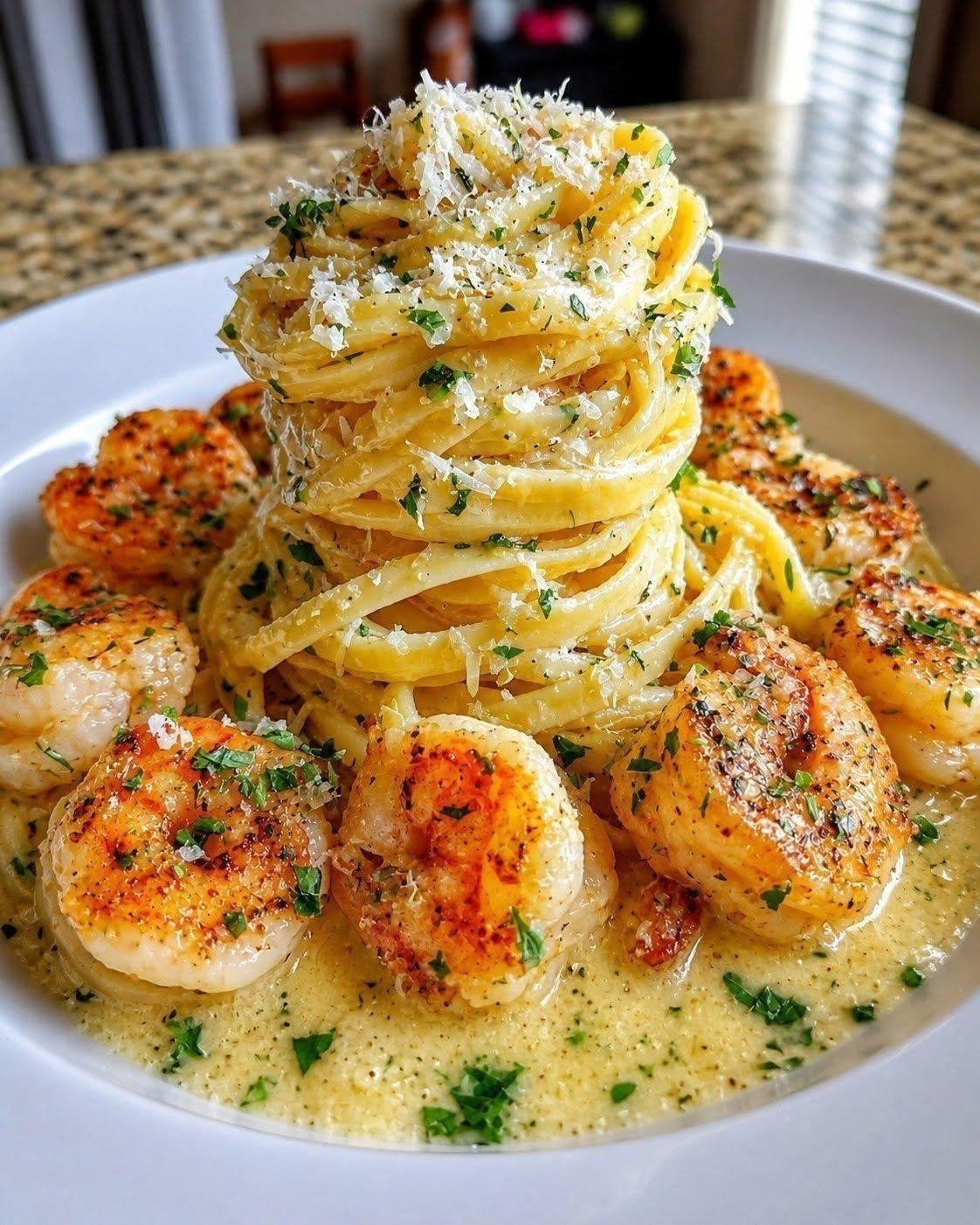
Bright, fresh, and bursting with Mediterranean flavors, this Lemon Shrimp Pasta combines juicy shrimp, tender pasta, garlic, fresh lemon juice, cherry tomatoes, and herbs in a light olive oil sauce. Finished with Parmesan cheese and fresh parsley, it makes a delicious, easy dinner for the whole family!
Ingredients
For the Pasta
- 12 oz (340 g) linguine or spaghetti
- 1 lb (450 g) large shrimp, peeled and deveined
- 2 tablespoons olive oil
- 3 tablespoons unsalted butter
- 5 cloves garlic, minced
- 1½ cups cherry tomatoes, halved
- 1 teaspoon lemon zest
- 3 tablespoons fresh lemon juice
- ½ teaspoon red pepper flakes (optional)
- ½ teaspoon dried oregano
- ½ teaspoon salt, or to taste
- ¼ teaspoon black pepper
- ½ cup reserved pasta cooking water
For the Mediterranean Flavor - ½ cup pitted Kalamata olives, halved
- 2 tablespoons capers, drained
- ½ cup freshly grated Parmesan cheese
- ¼ cup fresh parsley, chopped
- 2 tablespoons fresh basil, chopped
- ¼ teaspoon dried thyme
Optional Garnishes - Extra lemon wedges
- Additional Parmesan cheese
- A drizzle of extra-virgin olive oil
- Freshly cracked black pepper
Instructions
Step 1: Cook the Pasta
- Bring a large pot of salted water to a boil.
- Add the linguine or spaghetti and cook according to the package instructions until al dente.
- Before draining, reserve ½ cup of pasta cooking water.
- Drain the pasta and set aside.
Step 2: Prepare the Shrimp - Pat the shrimp dry with paper towels.
- Season with salt, black pepper, oregano, and dried thyme.
- Heat the olive oil and 1 tablespoon of butter in a large skillet over medium-high heat.
- Add the shrimp in a single layer.
- Cook for about 1–2 minutes per side, until pink and opaque.
- Transfer the shrimp to a plate to prevent overcooking.
Step 3: Sauté the Garlic and Tomatoes - Reduce the heat to medium.
- Add the remaining 2 tablespoons of butter to the skillet.
- Stir in the minced garlic and red pepper flakes, if using.
- Cook for about 30 seconds until fragrant, taking care not to burn the garlic.
- Add the cherry tomatoes and cook for 3–4 minutes, until they begin to soften and release their juices.
Step 4: Make the Lemon Sauce - Add the lemon zest, fresh lemon juice, Kalamata olives, and capers.
- Stir gently to combine the Mediterranean flavors.
- Pour in about ¼ cup of the reserved pasta water.
- Simmer for 1–2 minutes to create a light, glossy sauce.
- Add more pasta water if needed to loosen the sauce.
Step 5: Combine the Pasta and Shrimp - Add the drained pasta to the skillet.
- Toss well so the pasta is coated with the lemon-garlic sauce.
- Return the cooked shrimp to the skillet.
- Sprinkle in the Parmesan cheese and chopped parsley.
- Toss gently over low heat for 1–2 minutes until everything is warmed through.
- Add the fresh basil just before serving.
Step 6: Garnish and Serve - Remove the skillet from the heat.
- Taste and adjust the lemon juice, salt, and black pepper as desired.
- Garnish with extra Parmesan, fresh herbs, and lemon wedges.
- Serve immediately while warm and flavorful.
Recipe Information
- Prep time: 15 minutes
- Cook time: 20 minutes
- Total time: 35 minutes
- Servings: 4
- Course: Main course
- Cuisine: Mediterranean-inspired
- Difficulty: Easy
Nutrition Information
Estimated per serving, based on 4 servings. - Calories: 520–620
- Protein: 30–38 g
- Carbohydrates: 55–65 g
- Fat: 18–25 g
- Saturated fat: 7–10 g
- Fiber: 3–5 g
- Sugar: 4–7 g
- Sodium: 800–1,200 mg
Nutrition values vary depending on the pasta, shrimp size, cheese, olives, and amount of salt used.
Nut Information and Allergens - Tree nuts: No nuts are required in this recipe.
- Peanuts: No peanuts are required.
- Shellfish: Contains shrimp, a major food allergen.
- Dairy: Contains butter and Parmesan cheese.
- Gluten: Regular wheat pasta contains gluten.
- Possible cross-contact: Check labels on olives, capers, cheese, and packaged ingredients for allergen warnings.
Nut-free preparation: This recipe is naturally nut-free as written, provided all ingredients and kitchen equipment are safe for the person with the allergy.
Gluten-free option: Use certified gluten-free pasta and check all packaged ingredients.
Dairy-free option: Replace the butter with olive oil and omit the Parmesan or use a suitable dairy-free alternative.
Tips for the Best Mediterranean Lemon Shrimp Pasta
- Avoid overcooking shrimp: Remove them as soon as they turn pink and opaque.
- Use fresh lemon: Fresh juice and zest give the dish a brighter flavor than bottled juice alone.
- Save pasta water: Its starch helps the sauce cling to the noodles.
- Adjust the salt carefully: Olives, capers, Parmesan, and salted pasta water already contribute sodium.
- Add vegetables: Baby spinach, zucchini, or artichoke hearts make delicious additions.
- Make it spicy: Increase the red pepper flakes for a little heat.
- Serve fresh: This pasta tastes best immediately after cooking.
- Storage: Refrigerate leftovers in an airtight container within two hours and eat within 3–4 days.
- Reheating: Warm gently in a skillet with a splash of water or broth until heated through. Avoid prolonged heating, which can make shrimp rubbery.
Frequently Asked Questions (Q&A)
Q1: Can I use frozen shrimp?
Yes. Thaw completely in the refrigerator or under cold running water, then pat dry before cooking.
Q2: What pasta works best for this recipe?
Linguine and spaghetti work beautifully. Fettuccine, penne, and angel hair are also good choices.
Q3: Can I make this recipe without butter?
Yes. Use additional extra-virgin olive oil for a lighter, dairy-free version.
Q4: Can I add cream to the lemon sauce?
Yes. Add about ¼ cup of heavy cream for a creamy variation. Keep the heat low and adjust the lemon juice to taste.
Q5: Can I make this pasta ahead of time?
It is best served fresh, but you can prepare the ingredients ahead. Cook the pasta and shrimp shortly before serving for the best texture.
Q6: What vegetables go well with Mediterranean shrimp pasta?
Spinach, asparagus, zucchini, artichokes, and roasted red peppers all complement the lemon and garlic flavors.
Q7: How do I know when shrimp are cooked?
Shrimp should be opaque throughout and reach an internal temperature of 145°F (63°C). Avoid cooking them longer than necessary.
Q8: Is this recipe healthy?
It provides protein from shrimp and can supply fiber and micronutrients from tomatoes and herbs. Portion size and the amount of butter, cheese, and salt affect the overall nutritional profile.
Q9: Can I omit olives and capers?
Absolutely. The pasta will still taste delicious with lemon, garlic, tomatoes, and herbs. Add a little extra lemon zest if you want to maintain a bright flavor.
Q10: Can I freeze leftovers?
Freezing is possible, but the pasta texture and shrimp quality may decline. Refrigerating and enjoying the leftovers within 3–4 days is generally preferable.
Leave a Reply