
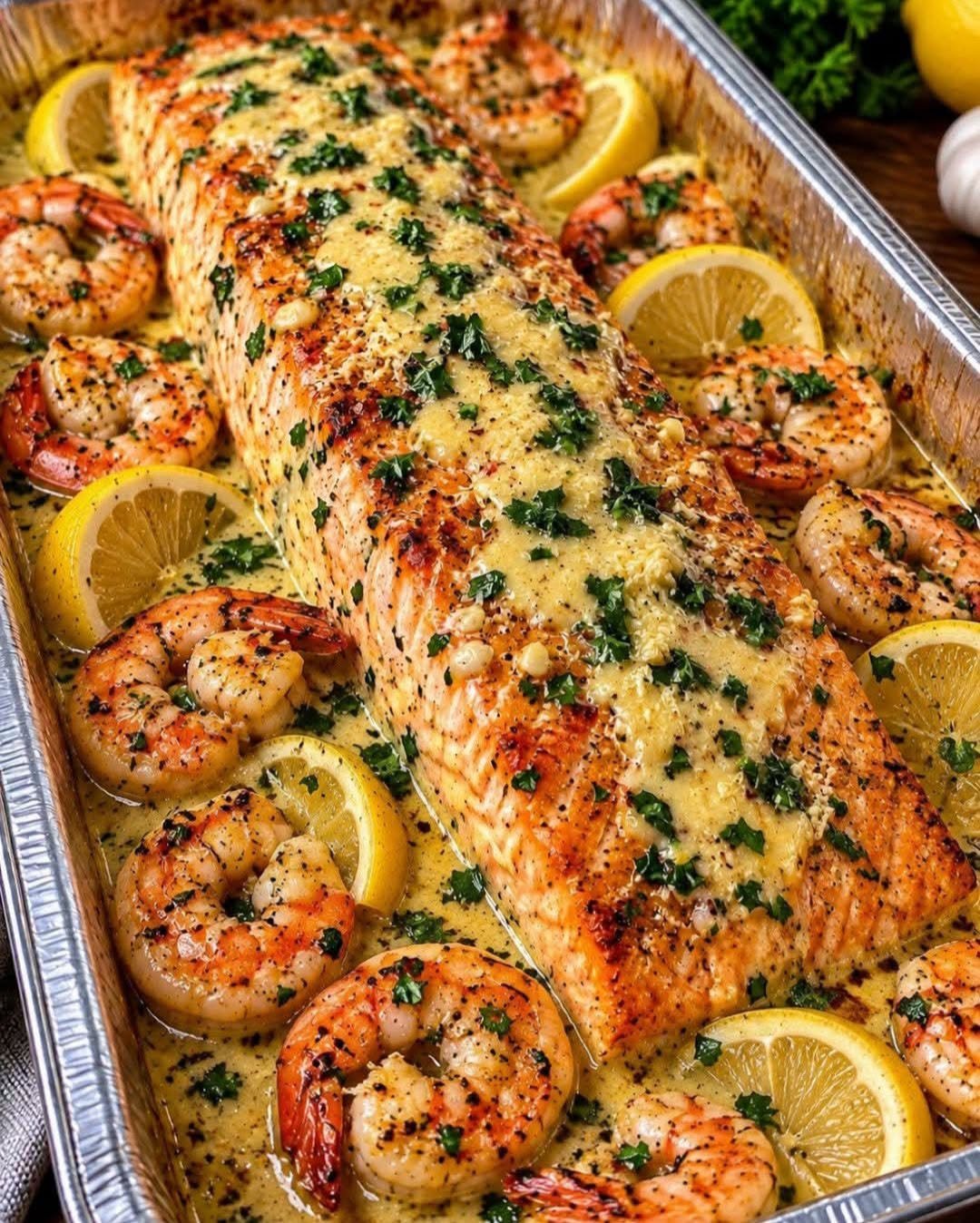
A rich, comforting one-pan seafood dinner featuring tender salmon and juicy shrimp baked in a creamy garlic-Parmesan sauce with fresh lemon and herbs. Adding the shrimp after the salmon has started cooking helps prevent the shrimp from becoming overcooked.
Ingredients
For the Seafood
1½ lb (680 g) salmon fillet, skin removed
1 lb (450 g) large shrimp, peeled and deveined
1 tbsp olive oil
1 tsp paprika
1 tsp Italian seasoning
½ tsp garlic powder
½ tsp salt
½ tsp black pepper
For the Creamy Lemon Garlic Sauce
3 tbsp unsalted butter
5 garlic cloves, finely minced
1 cup (240 ml) heavy cream
½ cup (120 ml) low-sodium seafood or chicken broth
½ cup (50 g) freshly grated Parmesan cheese
1 tbsp fresh lemon juice
1 tsp lemon zest
1 tsp Dijon mustard
½ tsp Italian seasoning
¼ tsp red pepper flakes, optional
2 tbsp fresh parsley, chopped
Salt and black pepper, to taste
For Garnish
Lemon slices or wedges
Fresh parsley
Extra Parmesan, optional
Fresh dill, optional
Instructions
- Preheat the oven
Preheat oven to 400°F (200°C). Lightly grease a large baking dish. - Prepare the seafood
Pat the salmon and shrimp very dry with paper towels. This is important because excess moisture can make the finished sauce watery.
Cut the salmon into 4–6 large portions.
Season the salmon and shrimp with paprika, Italian seasoning, garlic powder, salt, and black pepper.
- Make the creamy garlic sauce
Melt the butter in a small saucepan over medium-low heat.
Add the minced garlic and cook for about 30 seconds, just until fragrant. Don’t let the garlic become dark brown.
Pour in the broth and simmer for 2 minutes.
Add the heavy cream and Dijon mustard. Simmer gently for 2–3 minutes.
Reduce the heat to low and gradually whisk in the Parmesan until smooth and melted.
Remove from the heat and stir in the lemon zest, lemon juice, red pepper flakes, and half of the parsley.
Adding the lemon toward the end helps keep the cream sauce smooth.
- Start baking the salmon
Arrange the salmon pieces in the prepared baking dish.
Spoon about ⅔ of the creamy sauce over the salmon.
Bake uncovered for 10–12 minutes.
- Add the shrimp
Remove the baking dish from the oven.
Arrange the seasoned shrimp around the salmon. Pour the remaining sauce over the shrimp and salmon.
Add a few lemon slices around the seafood.
Return the dish to the oven and bake for another 8–10 minutes, or until the shrimp are opaque and cooked through and the salmon flakes easily.
Shrimp cook quickly, so adding them later helps keep them tender.
- Check for doneness
For food safety, salmon should reach 145°F (63°C) in the thickest part. Shrimp should be opaque and firm. - Garnish and serve
Remove from the oven and sprinkle with the remaining parsley.
Add fresh lemon juice, a little extra Parmesan, and fresh dill if desired.
Serve immediately with the creamy sauce spooned generously over the seafood.
What to Serve With It
Roasted asparagus
Steamed broccoli
Garlic green beans
Roasted potatoes
Mashed potatoes
Rice
Cauliflower rice
Crusty bread
Simple green salad
Buttered pasta
ALL NUT & ALLERGEN INFORMATION
Does this recipe contain nuts?
No. The basic recipe contains no tree nuts or peanuts.
Nut-free version:
The recipe is naturally nut-free as written. Check packaged Parmesan, broth, seasonings, and other processed ingredients if cooking for someone with a severe allergy.
Dairy:
Yes. Butter, heavy cream, and Parmesan contain dairy.
Shellfish:
Yes. Shrimp are shellfish and are a major allergen.
Fish:
Yes. Salmon is a finfish and is a major allergen.
Gluten:
The basic recipe can be gluten-free, but check the labels on broth, Dijon mustard, seasonings, and Parmesan to ensure they are certified or labeled gluten-free when necessary.
Egg:
No egg is required.
Soy:
The basic recipe does not require soy, but packaged ingredients should be checked for cross-contact if needed.
Nut-free garnish options:
Fresh parsley, dill, lemon zest, lemon slices, or extra Parmesan.
Q&A
Q: Can I use frozen salmon?
A: Yes, but thaw it completely in the refrigerator first and pat it very dry before cooking.
Q: Can I use frozen shrimp?
A: Yes. Thaw completely, remove excess moisture, and pat dry before seasoning.
Q: Can I use salmon fillets instead of one large fillet?
A: Absolutely. Four individual fillets work very well and make serving easier.
Q: Can I substitute half-and-half for heavy cream?
A: Yes, but the sauce will be thinner. Heavy cream gives the creamiest and most stable result.
Q: Why is my sauce watery?
A: Seafood releases moisture during cooking. Pat the seafood very dry, avoid overcrowding the dish, and use heavy cream rather than a low-fat dairy product.
Q: Why add the shrimp later?
A: Shrimp cook much faster than salmon. Adding them partway through baking helps prevent them from becoming rubbery or overcooked.
Q: Can I add spinach?
A: Yes. Add about 2 cups of fresh baby spinach to the baking dish before adding the seafood. It will wilt into the creamy sauce.
Q: Can I add vegetables?
A: Yes. Asparagus, spinach, broccoli, zucchini, and cherry tomatoes all pair nicely with the lemon-garlic sauce.
Q: Can I make this spicy?
A: Yes. Add ½–1 teaspoon red pepper flakes or a little cayenne pepper.
Q: Can I use mozzarella instead of Parmesan?
A: You can, but Parmesan provides more savory flavor and melts into the sauce more naturally.
Q: Can I use garlic powder instead of fresh garlic?
A: Yes, but fresh garlic gives the sauce a much stronger and fresher flavor.
Q: Can I prepare this ahead of time?
A: You can prepare the sauce and season the seafood several hours ahead, but it’s best to bake the seafood shortly before serving.
Q: How do I store leftovers?
A: Refrigerate leftovers in an airtight container and use within 2–3 days for the best quality.
Q: How should I reheat it?
A: Reheat gently in a covered skillet or baking dish at a low temperature. Add a splash of broth or cream if the sauce has thickened. Avoid boiling the sauce.
Q: Can I freeze this seafood bake?
A: Freezing isn’t recommended for the best texture because creamy sauces can separate and seafood can become less tender after thawing and reheating.
Q: Can I serve it with pasta?
A: Yes! Toss cooked pasta with some of the creamy lemon sauce and serve the salmon and shrimp on top.
Q: Is this a good meal-prep recipe?
A: It can be portioned for meal prep, but seafood is best enjoyed fresh. If meal-prepping, refrigerate promptly and reheat gently rather than repeatedly reheating the same portion.
Leave a Reply