
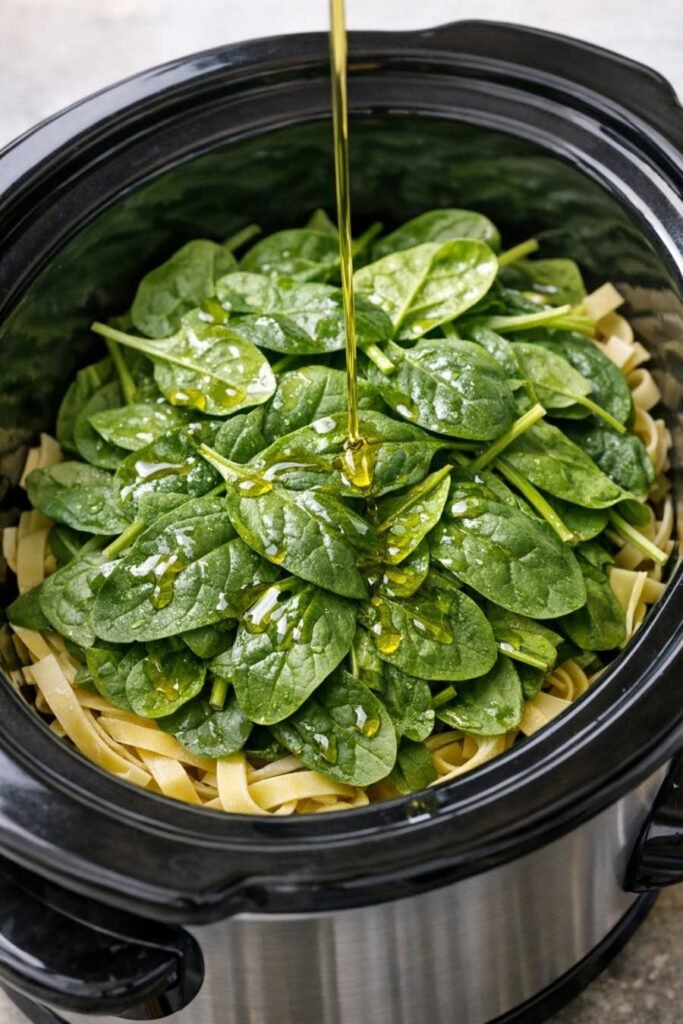
Creamy Slow Cooker Spinach Pasta
Recipe Overview
– Prep Time: 15 minutes
– Cook Time: 2–3 hours on HIGH or 3–4 hours on LOW
– Total Time: Approximately 2 hours 15 minutes to 4 hours 15 minutes
– Servings: 6
– Course: Main Dish, Lunch, or Dinner
– Cuisine: Italian-Inspired
– Cooking Method: Slow Cooker
– Difficulty: Easy
– Diet: Vegetarian
Ingredients
For the Pasta
– 12 oz (340 g) penne pasta or rotini
– 5 cups fresh baby spinach, roughly chopped
– 1 small yellow onion, finely chopped
– 3 cloves garlic, minced
– 1 can (14.5 oz) diced tomatoes, drained
– 3 cups vegetable broth, preferably low-sodium
– 1 cup heavy cream
– 1 cup shredded mozzarella cheese
– ½ cup grated Parmesan cheese
– 2 tablespoons olive oil
– 1 teaspoon Italian seasoning
– ½ teaspoon dried oregano
– ½ teaspoon black pepper
– ¼ teaspoon salt, or to taste
– ¼ teaspoon red pepper flakes, optional
Optional Ingredients
– ½ cup sliced mushrooms
– ½ cup chopped sun-dried tomatoes
– ¼ cup cream cheese for extra creaminess
– 2 tablespoons fresh basil, chopped
– ¼ cup additional Parmesan cheese for serving
Instructions
Step 1: Prepare the Slow Cooker
Lightly grease the inside of a 5–6-quart slow cooker with olive oil or cooking spray.
Add the chopped onion, minced garlic, drained diced tomatoes, Italian seasoning, oregano, black pepper, salt, and red pepper flakes.
Stir everything together.
Step 2: Add the Broth
Pour the vegetable broth into the slow cooker.
Add the olive oil and stir to combine.
If using mushrooms or sun-dried tomatoes, add them at this stage.
Cover with the lid.
Step 3: Slow Cook the Sauce
Cook on HIGH for approximately 1½–2 hours or on LOW for approximately 2½–3 hours, until the onions are tender and the flavors have blended.
Cooking times vary depending on your slow cooker.
Step 4: Add the Pasta
Add the uncooked pasta to the slow cooker.
Stir well to make sure the pasta is distributed throughout the broth.
Cover and cook on HIGH for approximately 20–40 minutes, stirring every 10–15 minutes, until the pasta is tender but still slightly firm.
Important: Pasta cooking times vary by shape, brand, and slow cooker. Begin checking early to prevent overcooking. If the mixture becomes too thick before the pasta is tender, add a little hot broth.
Step 5: Add the Cream
Once the pasta is nearly tender, stir in the heavy cream.
Add the cream cheese if using.
Mix gently until the sauce becomes creamy and smooth.
Allow the mixture to cook for another 5–10 minutes.
Step 6: Add Fresh Spinach
Add the chopped fresh spinach to the slow cooker.
Stir gently until the spinach is evenly distributed.
Cover and cook for approximately 5–10 minutes, until the spinach has wilted.
Fresh spinach reduces considerably in volume as it cooks.
Step 7: Add the Cheese
Stir in the shredded mozzarella and grated Parmesan cheese.
Mix until the cheese melts and the sauce becomes creamy.
If the sauce is too thick, add a little warm vegetable broth.
If the sauce is too thin, leave the lid slightly open for a few minutes while stirring occasionally.
Step 8: Finish and Serve
Turn off the slow cooker.
Add fresh basil or additional Parmesan cheese if desired.
Allow the pasta to rest for approximately 5 minutes so the sauce can thicken.
Serve warm.
Enjoy this comforting Fresh Spinach and Pasta in the Slow Cooker as a delicious vegetarian dinner or family-friendly meal.
Serving Suggestions
Serve this creamy spinach pasta with:
– Fresh Mediterranean cucumber and tomato salad
– Garlic bread
– Roasted broccoli
– Grilled chicken breast
– Roasted vegetables
– Fresh basil and Parmesan cheese
For a Mediterranean-inspired dinner, serve with a simple tomato, cucumber, and olive salad.
Storage Instructions
Refrigerator: Allow the pasta to cool slightly and transfer it to an airtight container. Refrigerate for up to 3–4 days.
Freezer: Freeze in airtight containers for up to 2 months for best quality. Cream-based sauces may change texture after freezing.
Reheating: Reheat in the microwave or on the stovetop with a splash of milk or vegetable broth. Stir gently until heated through.
Avoid prolonged reheating, as the pasta can become soft and the sauce may separate.
Nutrition Information
Estimated per serving, based on 6 servings and the ingredients listed. Actual nutrition varies by pasta, cheese, cream, and broth brands.
Nutrient Amount
Calories 440
Protein 17 g
Total Fat 20 g
Saturated Fat 10 g
Carbohydrates 49 g
Fiber 4 g
Total Sugars 6 g
Cholesterol 55 mg
Sodium 540 mg
Nut Information & Allergen Details
Tree Nuts: No tree nuts are included in the listed ingredients.
Peanuts: No peanuts are included in the listed ingredients.
Contains:
– Wheat, if using regular pasta
– Milk and dairy products, including heavy cream, mozzarella, Parmesan, and optional cream cheese
Gluten: Regular pasta contains gluten. Use certified gluten-free pasta and verify all ingredient labels for a gluten-free version.
Soy: No soy ingredients are intentionally included in the recipe. Check packaged pasta, cheese, broth, and other ingredients for soy additives or possible cross-contact.
Cross-Contamination: Always check ingredient labels and use clean preparation equipment if cooking for someone with food allergies.
Important: This recipe is not dairy-free. Use suitable dairy-free alternatives if needed, keeping in mind that the sauce texture and nutritional values will change.
Recipe Tips
1. Add spinach near the end: Fresh spinach wilts quickly and tastes best when added toward the end of cooking.
2. Avoid overcooked pasta: Slow cookers vary in temperature, so check pasta frequently during the final cooking stage.
3. Use low-sodium broth: This helps control the sodium content of the recipe.
4. Make it extra creamy: Add a small amount of cream cheese or additional mozzarella.
5. Add more vegetables: Mushrooms, zucchini, bell peppers, and sun-dried tomatoes work beautifully.
6. Increase protein: Add cooked chicken, turkey, white beans, or chickpeas.
7. Keep leftovers moist: Add a little broth or milk when reheating because pasta absorbs sauce as it sits.
8. Use fresh Parmesan: Freshly grated Parmesan melts smoothly and adds rich flavor.
Questions & Answers (Q&A)
Q1: Can I use frozen spinach instead of fresh spinach?
Yes. Thaw the frozen spinach completely and squeeze out excess water before adding it to the slow cooker. This prevents the sauce from becoming watery.
Q2: Can I use uncooked pasta in the slow cooker?
Yes. This recipe is designed for uncooked pasta, but pasta should be added toward the end of cooking. Adding it too early can make it overly soft.
Q3: Can I make this recipe without heavy cream?
Yes. You can use evaporated milk, half-and-half, or an unsweetened dairy-free alternative. The sauce will have a different consistency.
Q4: Can I add chicken to this spinach pasta?
Yes. Add fully cooked shredded chicken near the end of cooking and heat until thoroughly warmed. This creates a more protein-rich meal.
Q5: Is this recipe vegetarian?
Yes. Use vegetable broth and vegetarian Parmesan cheese to keep the recipe vegetarian. Traditional Parmesan may contain animal-derived rennet.
Q6: Can I make this recipe gluten-free?
Yes. Use certified gluten-free pasta and verify that the broth, seasonings, and cheese are gluten-free.
Q7: Can I use another pasta shape?
Yes. Penne, rotini, fusilli, and small shells work well. Different pasta shapes may require different cooking times.
Q8: Can I prepare this recipe ahead of time?
You can prepare and chop the vegetables ahead of time. For the best pasta texture, cook the pasta close to serving time rather than leaving it in the slow cooker for several hours.
Q9: Why is my pasta too soft?
Pasta may become soft if it cooks too long or is added too early. Check it frequently during the final cooking stage and turn off the slow cooker as soon as it is tender.
Q10: Why is my sauce too watery?
Spinach, tomatoes, and frozen vegetables can release water. Drain canned tomatoes, squeeze excess water from frozen spinach, and add the cream and cheese toward the end.
Q11: Can I make this recipe dairy-free?
Yes. Replace the heavy cream with an unsweetened dairy-free cream alternative and use dairy-free mozzarella and Parmesan substitutes.
Q12: Can I use low-sodium ingredients?
Yes. Use low-sodium vegetable broth, reduce or omit added salt, and choose lower-sodium cheese when available. The sodium content will depend on the ingredients used.
Q13: Can I add mushrooms?
Yes. Sliced mushrooms add flavor and work well with spinach, garlic, and creamy pasta sauce.
Q14: How do I store leftover spinach pasta?
Store leftovers in an airtight container in the refrigerator for up to 3–4 days. Add a little broth or milk when reheating to restore the creamy consistency.
Q15: Can I freeze this pasta?
Yes, although cream-based sauces may separate slightly after thawing. Freeze in individual portions and reheat gently with additional broth or milk.
Q16: Is this recipe suitable for meal prep?
Yes. Divide the pasta into individual containers and refrigerate. For the best texture, slightly undercook the pasta before storing.
Q17: Can I make this recipe without cheese?
Yes. Omit the cheese or use a dairy-free alternative. The sauce will be less thick and creamy.
Q18: What can I serve with slow cooker spinach pasta?
Fresh salad, roasted vegetables, garlic bread, grilled chicken, or roasted chickpeas are excellent options.
Final Recipe Notes
Fresh Spinach and Pasta in the Slow Cooker is a creamy, comforting, and easy vegetarian meal made with tender pasta, fresh spinach, garlic, tomatoes, and melted cheese.
It is perfect for family dinners, busy weeknights, and meal preparation.
For the best results, add the pasta and spinach toward the end of cooking, check the pasta frequently, and finish with cream and cheese for a smooth, delicious sauce.