
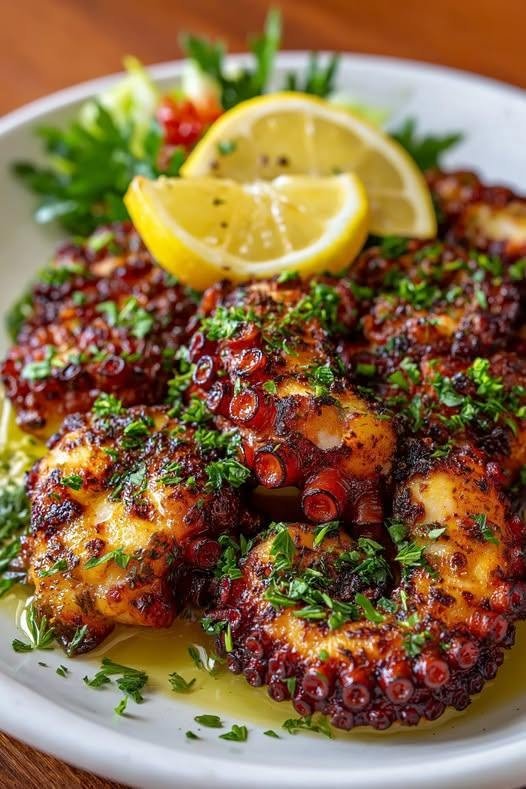
Preparation Details
- Prep Time: 15 minutes
- Cook Time: 60–90 minutes
- Marinating Time: 30 minutes
- Total Time: Approximately 2 hours
- Servings: 4
- Cuisine: Greek / Mediterranean
- Cooking Method: Boiling and Grilling
Ingredients
For the Octopus - 2 lbs (900 g) cleaned octopus, fresh or thawed frozen
- 1 lemon, halved
- 3 garlic cloves, lightly crushed
- 2 bay leaves
- 1 teaspoon whole black peppercorns
- ½ onion, roughly chopped
- Water, as needed for cooking
For the Lemon Garlic Marinade - ¼ cup extra virgin olive oil
- 3 tablespoons fresh lemon juice
- 3 garlic cloves, minced
- 1 teaspoon lemon zest
- 1 teaspoon dried oregano
- ½ teaspoon dried thyme
- ¼ teaspoon black pepper
- 1 tablespoon red wine vinegar
- 1 tablespoon fresh parsley, chopped
For Garnishing - Fresh parsley, chopped
- Fresh oregano leaves
- Lemon wedges
- Extra virgin olive oil
- Pinch of sea salt, to taste
Instructions
Step 1: Prepare the Octopus
If using frozen octopus, thaw it completely in the refrigerator. Rinse the cleaned octopus under cold running water and drain.
Check that the beak and internal organs have been removed if the octopus was not purchased fully cleaned.
Step 2: Simmer Until Tender
Place the octopus in a large pot with the onion, crushed garlic, bay leaves, black peppercorns, and lemon halves.
Add a small amount of water. Octopus releases moisture as it cooks, so it usually does not need to be fully submerged.
Cover and bring to a gentle simmer over medium-low heat.
Cook for approximately 45–75 minutes, depending on size, until a fork slides easily into the thickest part.
Step 3: Cool the Octopus
Remove the octopus from the cooking liquid and allow it to cool until easy to handle.
Separate the tentacles if desired. Pat them dry with paper towels to help achieve a beautiful char on the grill.
Step 4: Prepare the Marinade
In a small bowl, whisk together olive oil, lemon juice, minced garlic, lemon zest, oregano, thyme, black pepper, red wine vinegar, and chopped parsley.
Mix until well combined.
Step 5: Marinate
Place the cooked octopus tentacles in a shallow dish.
Pour the lemon garlic marinade over them, turning gently to coat.
Cover and refrigerate for approximately 30 minutes.
Step 6: Preheat the Grill
Preheat an outdoor grill or grill pan to medium-high heat. Lightly oil the grates to prevent sticking.
Step 7: Grill the Octopus
Remove the tentacles from the marinade, allowing excess liquid to drip off.
Grill for approximately 2–4 minutes per side until lightly charred with crispy edges and attractive grill marks.
Avoid overcooking, as the octopus is already tender from simmering.
Step 8: Finish with Lemon and Herbs
Transfer the grilled octopus to a serving platter.
Drizzle with fresh lemon juice and extra virgin olive oil.
Sprinkle with fresh parsley, oregano, and a little sea salt if desired.
Step 9: Serve
Serve immediately with lemon wedges, Greek salad, grilled vegetables, or warm crusty bread.
Serving Suggestions
- Traditional Greek village salad
- Grilled zucchini and eggplant
- Lemon roasted potatoes
- Mediterranean white bean salad
- Fresh cucumber and tomato salad
- Garlic sautéed spinach
- Grilled asparagus
- Warm pita bread
Nutrition Information
Estimated per serving (¼ of recipe, including marinade)
Nutrient Amount
Calories 260 kcal
Protein 34 g
Total Fat 12 g
Saturated Fat 2 g
Carbohydrates 5 g
Fiber 1 g
Sugar 1 g
Cholesterol 95 mg
Sodium 650 mg
Nutrition values are estimates and vary depending on octopus size, natural sodium content, marinade, and added salt.
Nut & Allergen Information
- Peanuts: None in the basic recipe.
- Tree Nuts: None in the basic recipe.
- Dairy: None.
- Eggs: None.
- Gluten: Naturally gluten-free, provided all packaged ingredients are certified gluten-free.
- Soy: None typically present.
- Fish: No fish ingredients.
- Shellfish: Octopus is a mollusk and belongs to the shellfish/mollusk allergen category in many food-allergy systems.
Important Allergy Note: Octopus can cause allergic reactions, particularly in people with mollusk or seafood allergies. Check ingredient labels and avoid cross-contact with other seafood.
Low-Sodium Adaptation
To make this recipe more suitable for a low-sodium diet: - Omit added salt.
- Use fresh, unseasoned octopus rather than salted or processed seafood.
- Choose fresh lemon juice, garlic, and herbs for flavor.
- Avoid commercial seafood seasonings.
- Check the natural sodium content of the octopus and compare the final nutrition information with your recommended daily sodium limit.
Frequently Asked Questions (Q&A)
Q1: Do I need to boil octopus before grilling?
Yes! Simmering the octopus first helps tenderize it. Grilling afterward creates a delicious charred exterior.
Q2: Can I use frozen octopus?
Absolutely! Frozen octopus works very well. Thaw it completely in the refrigerator before cooking.
Q3: How do I know when octopus is tender?
Insert a fork into the thickest part of the tentacle. It should slide in easily without much resistance.
Q4: Why is my grilled octopus tough?
It may not have been simmered long enough. Octopus needs sufficient gentle cooking time to become tender before grilling.
Q5: Can I cook octopus without an outdoor grill?
Yes! A cast-iron grill pan or heavy skillet works beautifully. Cook over medium-high heat until the tentacles develop golden, charred edges.
Q6: Can I prepare octopus ahead of time?
Yes! You can simmer the octopus a day ahead, cool it promptly, and refrigerate it. Marinate and grill shortly before serving.
Q7: Can I use lime instead of lemon?
Yes! Lime provides a slightly different citrus flavor but works well with garlic and Mediterranean herbs.
Q8: Is grilled octopus healthy?
Octopus is a lean source of protein and provides vitamin B12, iron, selenium, and other important nutrients.
Q9: Is this recipe keto-friendly?
Yes! The recipe is naturally low in carbohydrates and suitable for many keto-style eating plans.
Q10: How should I store leftovers?
Refrigerate cooked octopus in an airtight container within 2 hours of cooking. Use within 3–4 days and reheat gently before serving.
Q11: Can I make this recipe without garlic?
Yes! Simply omit garlic and increase lemon zest, oregano, thyme, and parsley for extra flavor.
Q12: Is this recipe suitable for a low-sodium diet?
It can be adapted by omitting added salt and avoiding salted seafood products. However, octopus naturally contains sodium, so check its nutritional information before serving.
Pro Tips for Perfect Greek Grilled Octopus
- Choose cleaned octopus for easier preparation.
- Cook slowly over gentle heat to achieve tender meat.
- Allow the cooked octopus to dry before grilling.
- Use a hot grill for beautiful char marks.
- Avoid overcrowding the grill.
- Add fresh lemon juice after grilling for the brightest flavor.
- Finish with good-quality extra virgin olive oil and fresh oregano.