
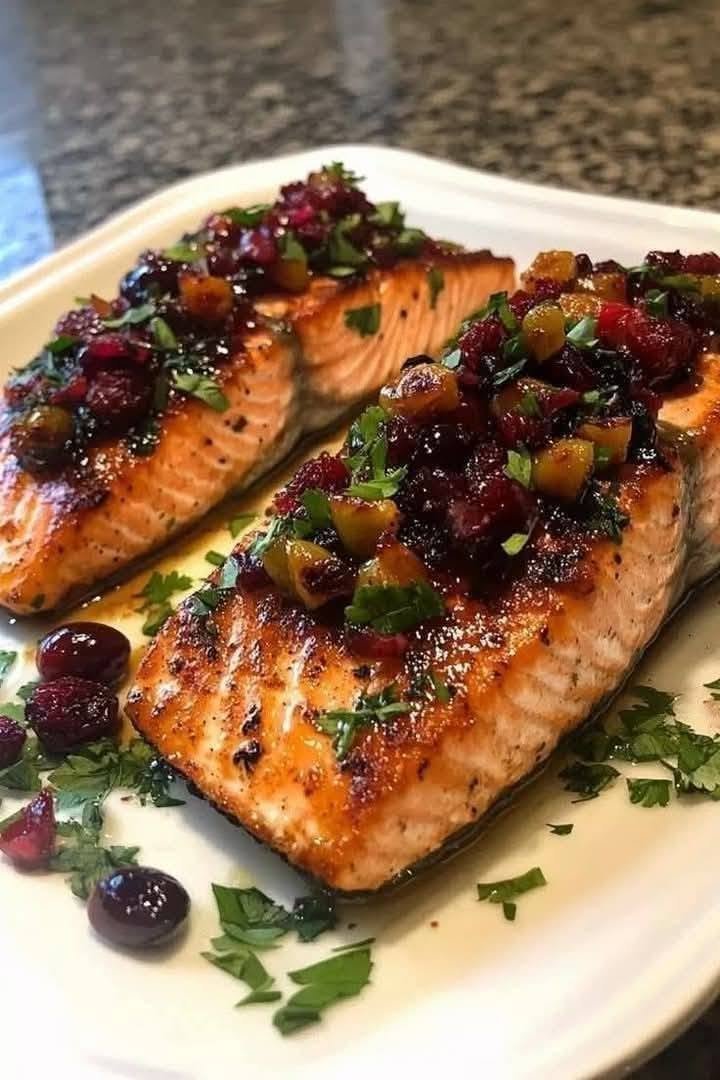
A beautiful sweet-and-savory dinner featuring golden, pan-seared salmon topped with a bright cranberry relish. The tart cranberries, citrus, shallot, and herbs balance the rich salmon perfectly. Cranberry and salmon are a proven combination in several recipe variations, including seared salmon with cranberry chutney and fresh cranberry relish.
Recipe Details
Prep Time: 15 minutes
Cook Time: 15 minutes
Total Time: 30 minutes
Servings: 4
Cuisine: American-inspired
Difficulty: Easy
Ingredients
For the Salmon
4 salmon fillets, about 6 oz each, skin-on or skinless
1 tbsp olive oil
1 tbsp butter
2 cloves garlic, minced
1 tsp Dijon mustard
½ tsp paprika
½ tsp salt
¼ tsp black pepper
½ tsp dried thyme
1 tbsp fresh lemon juice
For the Cranberry Relish
1½ cups fresh cranberries
½ small red onion or 1 shallot, finely chopped
1 small Granny Smith apple, finely diced
1 small orange
2 tbsp fresh parsley, chopped
1 tbsp extra-virgin olive oil
1½ tbsp red wine vinegar
1 tbsp maple syrup or honey
1 tsp Dijon mustard
¼ tsp salt
⅛ tsp black pepper
1 small jalapeño or serrano pepper, seeded and finely chopped, optional
Optional Garnish
Fresh parsley
Orange zest
Lemon wedges
Chopped toasted pecans or walnuts
Fresh cranberry relish commonly uses ingredients such as cranberries, red onion, herbs, vinegar, olive oil, and citrus to create a tart topping for salmon.
Instructions
- Prepare the cranberry relish
Rinse the cranberries and remove any soft or damaged berries.
Finely chop the red onion or shallot and dice the apple into very small pieces.
Zest the orange, then squeeze out about 2 tablespoons of orange juice.
Add the cranberries, onion, apple, parsley, orange zest, orange juice, olive oil, red wine vinegar, maple syrup, Dijon mustard, salt, and pepper to a food processor.
Pulse several times until the cranberries are finely chopped but the relish still has some texture.
Don’t puree it completely.
For a spicy version, add the chopped jalapeño or serrano.
Taste and adjust the sweetness, acidity, or salt as desired.
- Prepare the salmon
Pat the salmon fillets thoroughly dry with paper towels.
Season both sides with salt, pepper, paprika, and thyme.
Spread a thin layer of Dijon mustard over the flesh side.
Let the salmon sit at room temperature for about 5–10 minutes before cooking.
- Heat the skillet
Place a large heavy skillet over medium-high heat.
Add the olive oil.
Once the oil is hot and shimmering, carefully place the salmon into the pan.
For skin-on salmon, place it skin-side down.
- Sear the salmon
Cook without moving the salmon for approximately 4–5 minutes.
This allows the exterior to develop a beautiful golden crust.
Reduce the heat to medium.
Add the butter and minced garlic to the pan.
Once the butter melts, spoon the garlic butter over the salmon.
- Flip and finish
Carefully turn the salmon.
Cook for another 2–4 minutes, depending on the thickness of the fillets.
Squeeze fresh lemon juice over the salmon.
The salmon should be opaque and flake easily with a fork. For food safety, use a thermometer and cook salmon to 145°F (63°C) if following the USDA’s fully cooked guideline. Some culinary preparations serve salmon at lower internal temperatures, but those are not the same as the fully cooked food-safety standard.
- Rest the salmon
Transfer the salmon to a plate and allow it to rest for 2–3 minutes.
This helps the juices redistribute while you finish preparing the plates.
- Assemble
Place one salmon fillet on each plate.
Generously spoon the cranberry relish over the top.
Garnish with fresh parsley and a little orange zest.
Serve with lemon wedges.
What to Serve With It
This salmon pairs especially well with:
Roasted asparagus
Green beans
Brussels sprouts
Garlic mashed potatoes
Roasted sweet potatoes
Wild rice
Brown rice
Quinoa
Cauliflower rice
Simple arugula salad
For a lighter meal, serve it with roasted vegetables and a fresh green salad.
All Nut Information
Are nuts required?
No. The main recipe is completely delicious without nuts.
Optional nuts
For added crunch, sprinkle the finished dish with:
¼ cup toasted pecans
¼ cup toasted walnuts
¼ cup sliced almonds
Pecans are especially good with cranberry because their buttery flavor complements the tart fruit.
A similar salmon-and-cranberry recipe pairs the dish with toasted walnuts, so walnuts are a particularly natural option.
How to toast the nuts
Place chopped nuts in a dry skillet over medium-low heat.
Toast for 3–4 minutes, stirring frequently, until fragrant and lightly golden.
Remove immediately and let cool.
Nut-free version
Simply omit the nuts. No other changes are necessary.
Tree-nut allergy
If serving someone with a nut allergy, check packaged ingredients such as mustard, dried fruit, seasoning blends, and other prepared foods for allergen and cross-contact information.
Approximate Nutrition
Per serving, without optional nuts:
Calories: 430
Protein: 38 g
Carbohydrates: 18 g
Fat: 24 g
Saturated Fat: 5 g
Fiber: 3 g
Sugar: 11 g
Sodium: 500–600 mg
Nutrition is an estimate and will vary depending on salmon size, oil, butter, and the specific ingredients used.
Recipe Q&A
Can I use frozen salmon?
Yes. Thaw it completely in the refrigerator and pat it very dry before searing.
Can I use frozen cranberries?
Absolutely. Frozen cranberries work well. Let them partially thaw before processing so the relish maintains a good texture.
Can I use cranberry sauce instead?
Yes, but the flavor will be sweeter and softer. For a quick version, mix ½ cup whole-berry cranberry sauce with chopped apple, shallot, orange zest, and a splash of red wine vinegar.
Can I make the relish ahead of time?
Yes. The relish can be prepared 1–2 days ahead and refrigerated in an airtight container. The flavors become even more developed as it sits.
Can I cook the salmon in the oven?
Yes. Bake seasoned salmon at 400°F (200°C) until it reaches your preferred doneness. A similar cranberry-relish salmon preparation uses oven-roasted salmon with fresh cranberry relish.
How do I get crispy salmon skin?
Make sure the salmon skin is very dry, use a properly heated skillet, and don’t move the salmon during the first several minutes of cooking.
Why is my salmon sticking to the pan?
The pan may not be hot enough, the skin may be wet, or you may be trying to flip the salmon too early. Let it sear undisturbed until the skin naturally releases.
Can I use honey instead of maple syrup?
Yes. Honey works beautifully with the tart cranberries.
Can I make the relish less tart?
Yes. Add a little more maple syrup or honey. You can also reduce the amount of vinegar.
Can I make it spicy?
Definitely. Add minced jalapeño or serrano pepper. For extra heat, leave a few seeds in the pepper.
Can I use dried cranberries?
Yes, but they produce a sweeter relish. Soak them briefly in warm orange juice or water before chopping.
How long will leftovers last?
Store cooked salmon in an airtight container in the refrigerator for up to 3 days. Store the relish separately for the best texture.
Can I freeze the cranberry relish?
The relish can be frozen, although the apple and onion may soften after thawing. For best texture, prepare it fresh.
Is this recipe gluten-free?
The basic ingredients are naturally gluten-free, but check packaged mustard and seasonings for gluten or cross-contact if needed.
Is this recipe dairy-free?
It can be. Replace the butter with additional olive oil or a dairy-free butter alternative.
Is this recipe keto-friendly?
The salmon itself is keto-friendly, but the cranberry relish contains natural sugars and maple syrup. For a lower-carb version, reduce the sweetener and use a smaller portion of relish.
Can I prepare the whole meal ahead?
Prepare the relish ahead, but cook the salmon shortly before serving. Freshly seared salmon has the best texture and crust.
Leave a Reply