
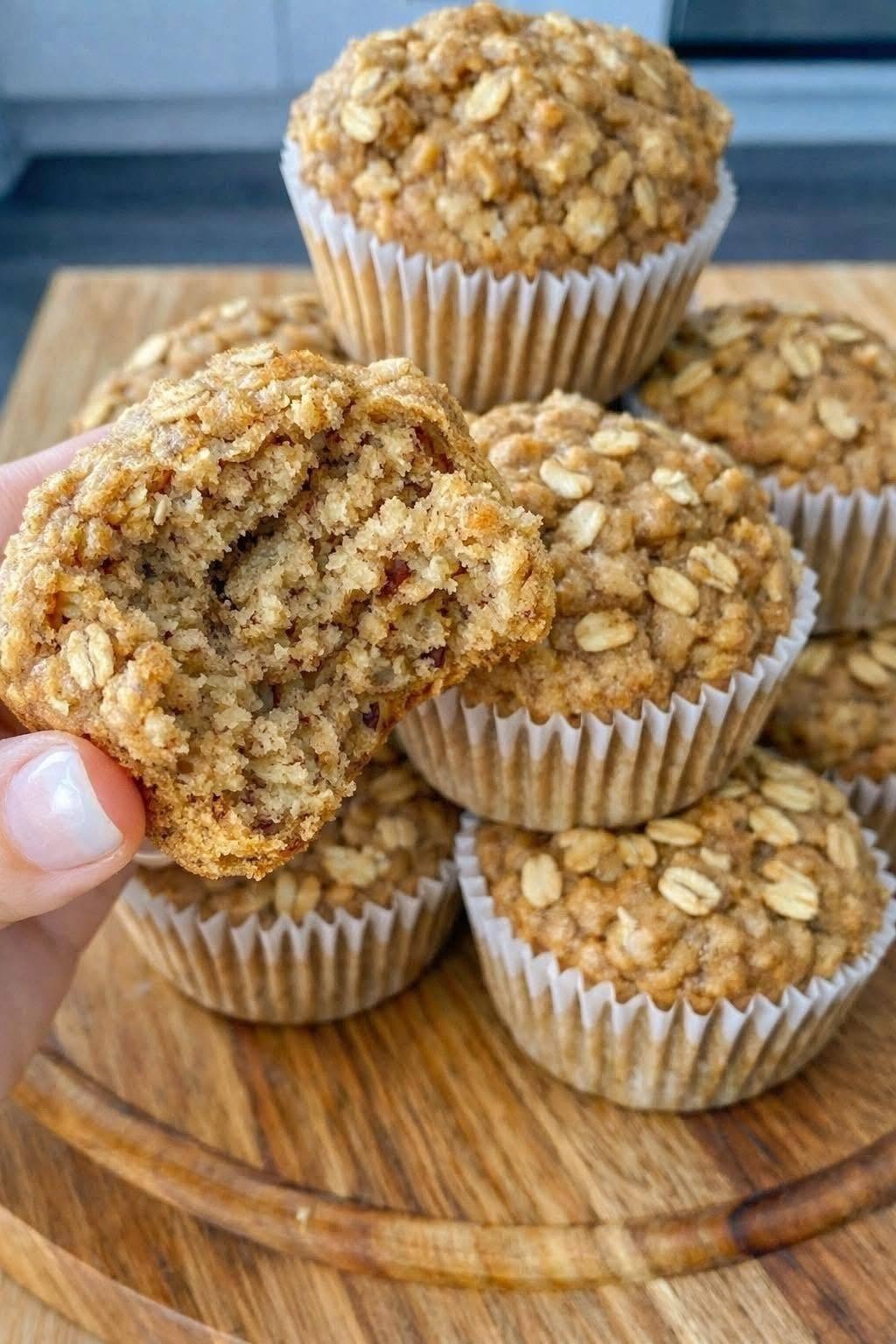
Soft & Fluffy Oatmeal Muffins
These muffins are inspired by the ones in your photo: golden, fluffy, moist inside, warmly spiced, and generously topped with rolled oats. The secret to a tender oatmeal muffin is to soak the oats before mixing the batter; this helps prevent the oats from pulling moisture from the finished muffin.
F
Feel Good Foodie
+1
Makes: 12 muffins
Prep: 15 minutes
Soaking: 10–15 minutes
Bake: 18–22 minutes
Total: about 45 minutes
Ingredients
For the muffins
1 cup (90 g) rolled oats
1 cup (240 ml) milk
1½ cups (190 g) all-purpose flour
½ cup (100 g) packed light brown sugar
2 tsp baking powder
½ tsp baking soda
1 tsp ground cinnamon
½ tsp salt
2 large eggs, room temperature
⅓ cup (80 ml) neutral oil — canola, sunflower, vegetable, or avocado
1 tsp vanilla extract
½ cup (75 g) raisins, optional
Oat topping
⅓ cup (30 g) rolled oats
2 tbsp (25 g) brown sugar
1 tbsp all-purpose flour
1 tbsp melted butter
¼ tsp cinnamon
Pinch of salt
The combination of oats on top and a little brown sugar gives the muffins the rustic, crunchy appearance seen in your photograph. Similar oatmeal-muffin recipes use rolled oats in the batter and an oat-sugar topping.
F
Feel Good Foodie
Step-by-Step Recipe
- Prepare the oven
Preheat your oven to 400°F / 200°C.
Line a 12-cup muffin pan with paper liners.
For especially tall, bakery-style muffins, you can start at a higher temperature and reduce it after several minutes; this technique is commonly used to encourage a high dome.
C
Cakes by MK
+1
- Soak the oats
Put:
1 cup rolled oats
1 cup milk
in a large bowl.
Stir and leave for 10–15 minutes.
This step is important. The oats soften and absorb some of the milk, giving you a much more tender muffin.
F
Feel Good Foodie
+1
Tip: Don’t skip this if you want the soft texture shown in the photo.
- Make the dry mixture
In another bowl, whisk together:
flour
brown sugar
baking powder
baking soda
cinnamon
salt
Break up any brown-sugar lumps.
- Prepare the wet mixture
Add the following to the soaked oats:
eggs
oil
vanilla
Whisk gently until combined.
Don’t worry if the oat mixture looks thick.
- Combine
Add the dry ingredients to the wet mixture.
Using a spatula, fold everything together just until no large streaks of flour remain.
Don’t overmix!
A few small lumps are completely fine.
Overmixing develops gluten and can turn soft muffins into dense, chewy muffins. Traditional oatmeal muffin recipes similarly emphasize mixing only enough to moisten the ingredients.
L
LaRue County Extension Office
+1
- Add raisins
If using raisins, gently fold in:
½ cup (75 g) raisins
You can substitute:
chopped dates
dried cranberries
chopped dried apricots
mini chocolate chips
blueberries
Dried fruit is a particularly good match with oatmeal muffins.
F
Food Network
+1
Make the Oat Topping
Mix together:
⅓ cup rolled oats
2 tbsp brown sugar
1 tbsp flour
1 tbsp melted butter
¼ tsp cinnamon
pinch of salt
Rub the mixture lightly between your fingers until it resembles a coarse crumble.
Fill the Muffin Pan
Divide the batter between the 12 liners.
For the large, rounded muffins in your picture, fill each liner approximately ¾ to nearly full.
Sprinkle the oat topping generously over each muffin.
Press the oats very gently into the batter so they don’t fall off after baking.
Bake
For tall bakery-style muffins:
Bake at:
400°F / 200°C for 7 minutes
Then, without opening the oven, reduce the temperature to:
350°F / 175°C
and bake for another 11–15 minutes.
They’re done when:
the tops are golden
the centers spring back lightly
a toothpick inserted into the center comes out clean or with a few moist crumbs
This two-temperature approach is also used in published oatmeal-muffin recipes to encourage a good rise while preventing excessive drying.
C
Cakes by MK
+1
Cooling
Leave the muffins in the pan for 5–10 minutes.
Then transfer them to a wire rack.
What Makes These Muffins Soft?
There are four important things:
For the best texture, allow them to cool for at least 15–20 minutes before eating—but yes, they’re absolutely delicious warm.
- Soak the oats
This hydrates the oats before baking and contributes to a moist crumb.
F
Feel Good Foodie - Don’t overmix
Mix only until the flour disappears. - Don’t overbake
Take them out when the toothpick has a few moist crumbs rather than waiting for it to be completely bone-dry. - Use enough fat
Oil produces a particularly moist muffin and keeps the crumb soft even after cooling.
COMPLETE NUT & ALLERGEN INFORMATION
Are these muffins naturally nut-free?
Yes.
The basic recipe contains no peanuts or tree nuts.
However, if you’re preparing them for someone with a serious allergy, check the labels of packaged ingredients for cross-contact warnings.
Can I add nuts?
Absolutely.
Best choices
Walnuts:
½ cup chopped
→ earthy, slightly bitter, excellent with cinnamon and oats.
Pecans:
½ cup chopped
→ sweeter and buttery; probably my favorite for this recipe.
Almonds:
⅓–½ cup sliced or chopped
→ adds a nice crunch.
Cashews:
½ cup chopped
→ mild and creamy.
Hazelnuts:
⅓ cup chopped
→ excellent with chocolate chips.
My favorite nut combination
For a really good breakfast muffin:
⅓ cup chopped walnuts
⅓ cup raisins
1 tsp cinnamon
Fold them into the batter before filling the muffin cups.
Can I put nuts on top?
Yes.
Sprinkle approximately 1–2 teaspoons chopped pecans or walnuts over each muffin before baking.
For extra crunch, combine:
⅓ cup rolled oats
¼ cup chopped pecans
2 tbsp brown sugar
1 tbsp melted butter
This makes an excellent crunchy oat-nut topping.
Peanut allergy?
If you’re avoiding peanuts, don’t automatically assume nut-free products are safe.
Check the packaging for statements such as:
“contains peanuts”
“may contain peanuts”
“processed in a facility with peanuts”
Also check chocolate chips, granola, oat products, and packaged toppings.
Tree-nut allergy?
Tree nuts include, among others:
almonds
walnuts
pecans
cashews
pistachios
hazelnuts
macadamias
Brazil nuts
Simply leave all of these out for a nut-free recipe.
What about oats?
Oats are not nuts.
However, people with celiac disease or gluten sensitivity should choose certified gluten-free oats and gluten-free flour, because ordinary oats can have cross-contact with wheat during processing.
What about coconut?
Coconut is botanically a fruit, but it is sometimes treated separately in allergy labeling. If you’re cooking for someone with a coconut allergy, avoid coconut flour, coconut milk, coconut flakes, and coconut-based toppings unless you know they’re appropriate.
Can I use seeds instead of nuts?
Yes—and this is a great nut-free alternative.
Try:
2 tbsp sunflower seeds
2 tbsp pumpkin seeds
1 tbsp chia seeds
1 tbsp ground flaxseed
For a crunchy topping, sunflower + pumpkin seeds + oats work especially well.
Easy Substitutions
Ingredient Substitute
Milk Almond, oat, soy, or dairy milk
Oil Melted butter
Brown sugar Coconut sugar or regular sugar
All-purpose flour 1:1 gluten-free flour blend
Raisins Cranberries or dates
Eggs Suitable egg replacer
Rolled oats Quick oats
Walnuts Pecans or almonds
Rolled vs quick oats
Rolled oats: chewier and more rustic.
Quick oats: softer and more tender.
Both can work, but quick oats generally produce a softer muffin, while rolled oats give a heartier texture.
C
Cakes by MK
Delicious Variations
Banana Oatmeal Muffins
Replace about ¼ cup of the milk with ½ cup mashed ripe banana and reduce the brown sugar slightly.
Apple Cinnamon
Add:
1 small apple, finely diced
½ tsp extra cinnamon
¼ tsp nutmeg
Blueberry Oatmeal
Fold in 1 cup blueberries at the end.
Chocolate Chip
Add ½ cup semi-sweet chocolate chips.
Carrot Cake Oat Muffins
Add:
¾ cup grated carrot
¼ cup raisins
½ tsp nutmeg
¼ cup chopped walnuts, optional
Peanut Butter Oat
Add ⅓ cup creamy peanut butter to the wet ingredients. If serving someone with allergies, obviously omit this.
Oatmeal Muffin Q&A
Q: Why are my muffins dense?
A: Usually overmixing, too much flour, old baking powder/baking soda, or overbaking. Mix the batter gently and only until combined.
Q: Why didn’t they rise?
A: Check your baking powder and baking soda. Also make sure you aren’t leaving the mixed batter sitting around for a long time before baking.
Q: Can I use instant oats?
A: Yes, but the texture will be softer and less chewy.
Q: Can I use old-fashioned oats?
A: Yes—that’s actually an excellent choice for the rustic appearance shown in the photo.
K
King Arthur Baking
Q: Can I make these without raisins?
A: Definitely. The muffins are excellent plain.
Q: Can I reduce the sugar?
A: Yes. Reduce the brown sugar to ⅓ cup for a less-sweet breakfast muffin. You can reduce it further, although the texture and browning will change somewhat.
Q: Can I replace the oil with butter?
A: Yes. Use ⅓ cup melted butter. The flavor will be richer, while oil generally keeps muffins particularly moist.
Q: Can I use honey instead of brown sugar?
A: You can, but because honey is liquid, the batter will change. For the most reliable texture, use brown sugar.
Q: Can I make them dairy-free?
A: Yes. Use oat, soy, or another dairy-free milk and a neutral plant oil.
Q: Can I make them vegan?
A: Yes, but you’ll need both a dairy-free milk and an egg replacement. A commercial egg replacer is the most predictable option.
Q: Can I make them gluten-free?
A: Yes. Use a good 1:1 gluten-free flour blend and certified gluten-free oats.
T
The First Year
Q: Can I freeze oatmeal muffins?
A: Yes. Cool completely, wrap individually, and place in a freezer bag or airtight container.
They are best used within roughly 2–3 months for good quality.
Q: How do I reheat them?
A: Microwave one muffin for about 15–25 seconds, depending on your microwave.
Q: How should I store them?
A: Once completely cool, keep them in an airtight container. For best texture, consume within a couple of days at room temperature; refrigeration can extend storage but may make muffins firmer. Published recipes give similar short room-temperature storage guidance.
K
King Arthur Baking
+1
Q: Why are my muffins dry?
A: Most commonly:
too much flour,
not enough liquid,
overbaking,
too little fat,
not soaking the oats.
Q: Why did the oats on top burn?
A: Your oven may run hot, or the muffins were positioned too close to the top heating element. Bake on the center rack and loosely tent with foil if the tops brown too quickly.
Q: Can I make mini muffins?
A: Yes. Fill mini muffin cups about ¾ full and start checking them around 10–12 minutes.
Q: Can I make jumbo muffins?
A: Yes. Fill jumbo cups about ¾ full and expect a longer baking time—check the center with a toothpick rather than relying solely on the clock.
Leave a Reply