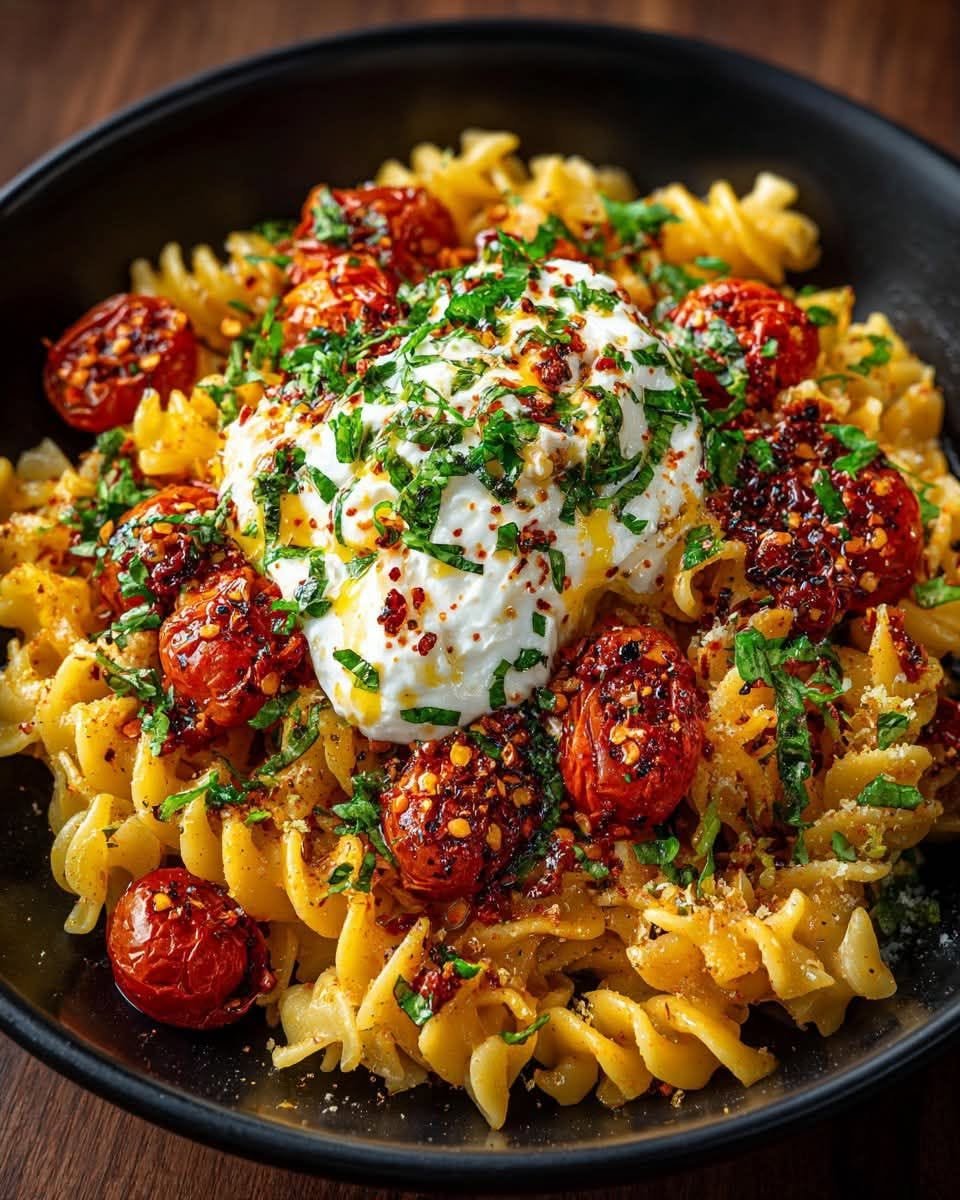
This Spicy Roasted Tomato Pasta with Burrata & Chili Oil combines sweet, blistered roasted tomatoes with garlic, chili, Parmesan, and creamy burrata. Finished with fragrant chili oil and fresh basil, it’s a simple restaurant-style pasta that’s perfect for a cozy dinner.
Ingredients
For the Roasted Tomatoes
2½ cups cherry or grape tomatoes
3 tbsp extra-virgin olive oil
4 cloves garlic, minced
½ tsp red pepper flakes
½ tsp Italian seasoning
½ tsp salt
¼ tsp black pepper
1 tsp honey or maple syrup, optional
For the Pasta
12 oz pasta, such as rigatoni, penne, spaghetti, or linguine
½ cup reserved pasta water
½ cup freshly grated Parmesan cheese
1 tbsp tomato paste
1 tbsp butter
½ tsp red pepper flakes, or more to taste
1 tbsp fresh lemon juice, optional
Salt and black pepper, to taste
For Serving
1 large ball burrata, about 4 oz
2 tbsp chili oil, plus more to taste
Fresh basil leaves
Extra Parmesan
Freshly cracked black pepper
Pinch of red pepper flakes, optional
Instructions
- Roast the Tomatoes
Preheat the oven to 425°F (220°C).
Place the cherry tomatoes on a large baking sheet.
Add olive oil, minced garlic, red pepper flakes, Italian seasoning, salt, and black pepper. Add honey if you want to balance the heat with a little sweetness.
Toss everything together until the tomatoes are evenly coated.
Roast for 20–25 minutes, until the tomatoes are blistered, softened, and beginning to caramelize.
For extra charred edges, broil for the final 1–2 minutes, watching carefully.
- Cook the Pasta
While the tomatoes roast, bring a large pot of salted water to a boil.
Cook the pasta according to the package directions until al dente.
Before draining, reserve about ½ cup pasta water.
Drain the pasta and set aside.
- Make the Spicy Tomato Sauce
Transfer the roasted tomatoes and garlic to a large skillet.
Add tomato paste, butter, and red pepper flakes.
Cook over medium heat for 2–3 minutes, gently pressing some of the tomatoes with the back of a spoon.
The tomatoes should break down and create a rustic, chunky sauce.
- Add the Pasta
Add the cooked pasta directly to the skillet.
Pour in about ¼ cup reserved pasta water and toss well.
Add more pasta water a little at a time until the sauce becomes glossy and coats the pasta.
Stir in Parmesan cheese.
Add lemon juice if using, then taste and adjust salt, black pepper, and chili flakes.
- Add the Burrata
Transfer the pasta to a large serving dish or individual bowls.
Tear the burrata into pieces and place it over the hot pasta.
Allow the heat from the pasta to soften the burrata slightly.
- Finish with Chili Oil
Drizzle generously with chili oil.
Top with fresh basil, extra Parmesan, freshly cracked black pepper, and an optional sprinkle of red pepper flakes.
Serve immediately while the burrata is creamy and the pasta is hot.
Prep & Cooking Time
Prep Time: 10 minutes
Roasting Time: 25 minutes
Pasta Time: 12 minutes
Total Time: About 35–40 minutes
Servings: 4
Helpful Tips
Use ripe cherry tomatoes for the sweetest flavor.
Don’t skip reserving pasta water—it helps create a silky sauce.
Roast the tomatoes until they are deeply blistered for maximum flavor.
Add burrata after cooking rather than stirring it completely into the sauce.
Start with a small amount of chili oil and add more according to your preferred spice level.
Freshly grated Parmesan melts much better than pre-shredded cheese.
For a smoother sauce, blend half of the roasted tomatoes before adding the pasta.
Adjust the Spice Level
Mild
Use just ¼ tsp red pepper flakes and a small drizzle of chili oil.
Medium
Use ½–1 tsp red pepper flakes plus 1–2 tbsp chili oil.
Spicy
Add extra red pepper flakes and 2–3 tbsp chili oil.
For very spicy pasta, a finely chopped fresh chili can also be roasted with the tomatoes.
Easy Variations
Creamy Tomato Pasta
Add ¼ cup heavy cream to the tomato sauce before adding the pasta.
Chicken
Add sliced grilled or roasted chicken for extra protein.
Shrimp
Add sautéed garlic shrimp just before serving.
Spinach
Stir in 2–3 cups fresh baby spinach during the final few minutes of cooking.
Mediterranean
Add Kalamata olives, fresh oregano, and a little crumbled feta along with the burrata.
Extra Garlic
Roast an additional 2–3 garlic cloves with the tomatoes for a richer garlic flavor.
Nut & Allergen Information
Nuts
This recipe contains no nuts as written.
There are no walnuts, almonds, pecans, cashews, pistachios, or peanuts in the standard recipe.
Common Allergens
Milk/Dairy: burrata, Parmesan, and butter
Wheat/Gluten: pasta, unless gluten-free pasta is used
Chili oil can contain additional ingredients depending on the brand, so check the label if cooking for someone with allergies.
Nut-Free
The recipe is naturally nut-free, but always check packaged ingredients for cross-contact warnings when serving someone with a severe nut allergy.
Gluten-Free
Use certified gluten-free pasta.
Vegetarian
Yes, as written.
Vegan
Use vegan Parmesan and burrata alternatives and replace the butter with olive oil.
Storage
Store leftover pasta in an airtight container in the refrigerator for up to 3 days.
For best results, store extra burrata separately and add it after reheating.
Reheat gently in a skillet with a splash of water or broth to loosen the sauce.
Freezing
The tomato sauce can be frozen, but the finished pasta and burrata are best enjoyed fresh.
If freezing the sauce, cool completely and store in a freezer-safe container for up to 2–3 months.
Thaw in the refrigerator and reheat before tossing with freshly cooked pasta.
Recipe Q&A
Q: Can I use regular tomatoes instead of cherry tomatoes?
A: Yes. Roma or plum tomatoes work well. Cut them into smaller pieces so they roast evenly.
Q: What pasta shape is best?
A: Rigatoni, penne, spaghetti, linguine, and bucatini all work beautifully. Short, ridged pasta holds the chunky tomato sauce especially well.
Q: Can I make this less spicy?
A: Absolutely. Reduce the red pepper flakes and use only a small drizzle of chili oil.
Q: Can I make it extra spicy?
A: Yes. Add more chili flakes, chili oil, or a finely chopped fresh chili.
Q: Can I use marinara sauce instead of roasted tomatoes?
A: You can, but roasting fresh tomatoes gives this recipe its signature sweet, smoky flavor.
Q: What is burrata?
A: Burrata is a fresh Italian cheese with a firm outer layer and a creamy interior. When placed on hot pasta, the center becomes beautifully soft and creamy.
Q: Can I substitute mozzarella for burrata?
A: Yes. Fresh mozzarella is a good substitute, although it won’t have the same creamy center.
Q: Can I use tomato paste?
A: Yes. Tomato paste is included in the recipe to intensify the tomato flavor and make the sauce richer.
Q: Why do I need pasta water?
A: Starchy pasta water helps emulsify the olive oil, tomato juices, butter, and Parmesan into a silky sauce that coats the pasta.
Q: Can I make this ahead of time?
A: You can roast the tomatoes and prepare the sauce ahead. For the best texture, cook the pasta and add the burrata just before serving.
Q: Can I add protein?
A: Yes. Grilled chicken, shrimp, Italian sausage, or crispy chickpeas are excellent additions.
Q: Can I use store-bought chili oil?
A: Yes. Choose your favorite chili oil or chili crisp. If using chili crisp, add it gradually because some varieties are much hotter than others.
Q: Can I use chili crisp instead of chili oil?
A: Yes. Chili crisp adds extra texture and a savory, crunchy element.
Q: Can I make this dairy-free?
A: Yes. Replace the butter with olive oil and use dairy-free Parmesan and burrata alternatives.
Q: How can I make the sauce smoother?
A: Blend the roasted tomatoes and garlic with a little pasta water before returning the sauce to the skillet.
Q: Can I add spinach?
A: Yes. Stir fresh spinach into the sauce during the last 1–2 minutes of cooking.
Q: Can I use dried basil?
A: Yes, but fresh basil gives the finished dish a much brighter flavor.
Leave a Reply